
Bimetallic Materials: A Comprehensive Introduction
1. Introduction
1.1 Evolution of Electrical Conductors
electrical conductor and development in parallel。from to ,for search for optimal conductor materialscontinuous innovation[1]。
Createanimation (60seconds),showingevolution from pure copper to aluminum to bimetallic
1:001.2 Definition of Bimetallic Materials
Bimetallic materials consist of two different metals bonded together to form a single composite structure。In electrical applications,this typically involves:
- Core:providing structural or economic advantages
- Claddingmaterial :providing surface performance(conductivity, corrosion resistance)
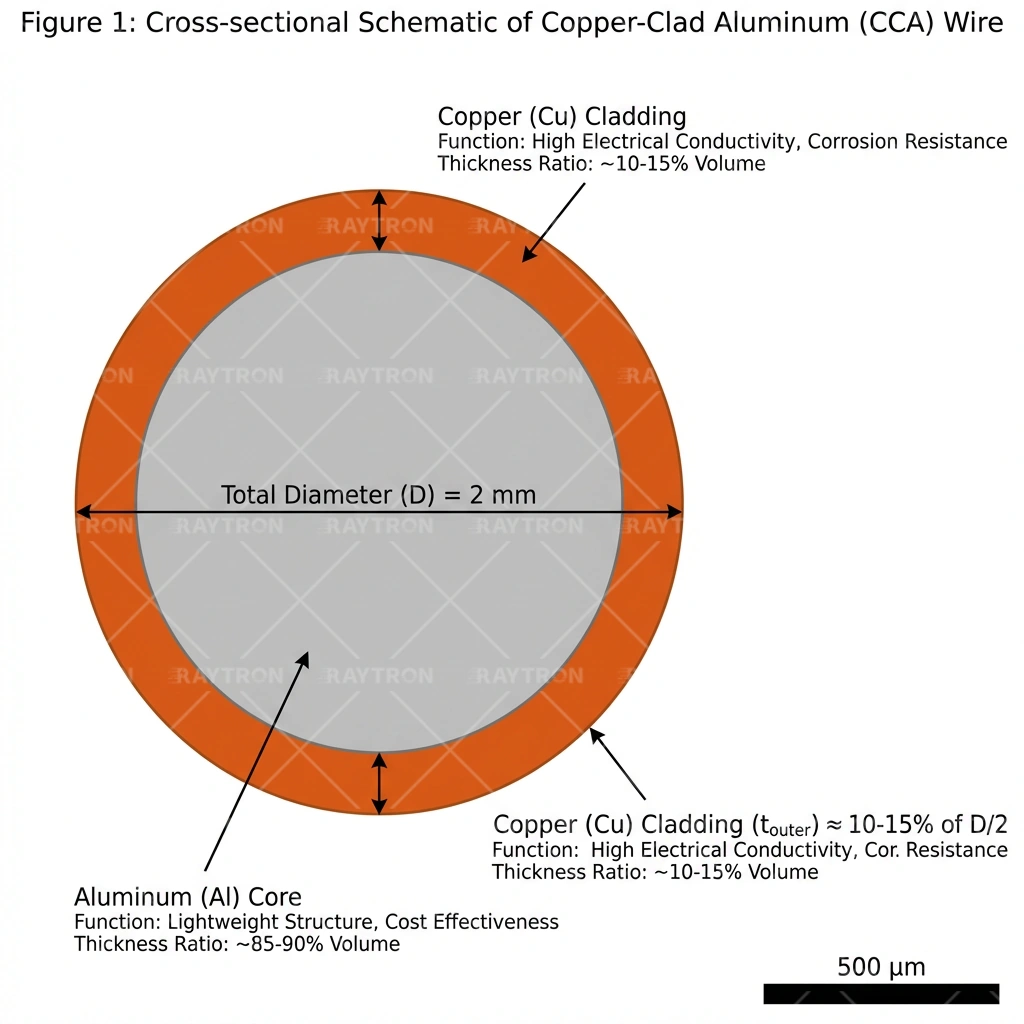
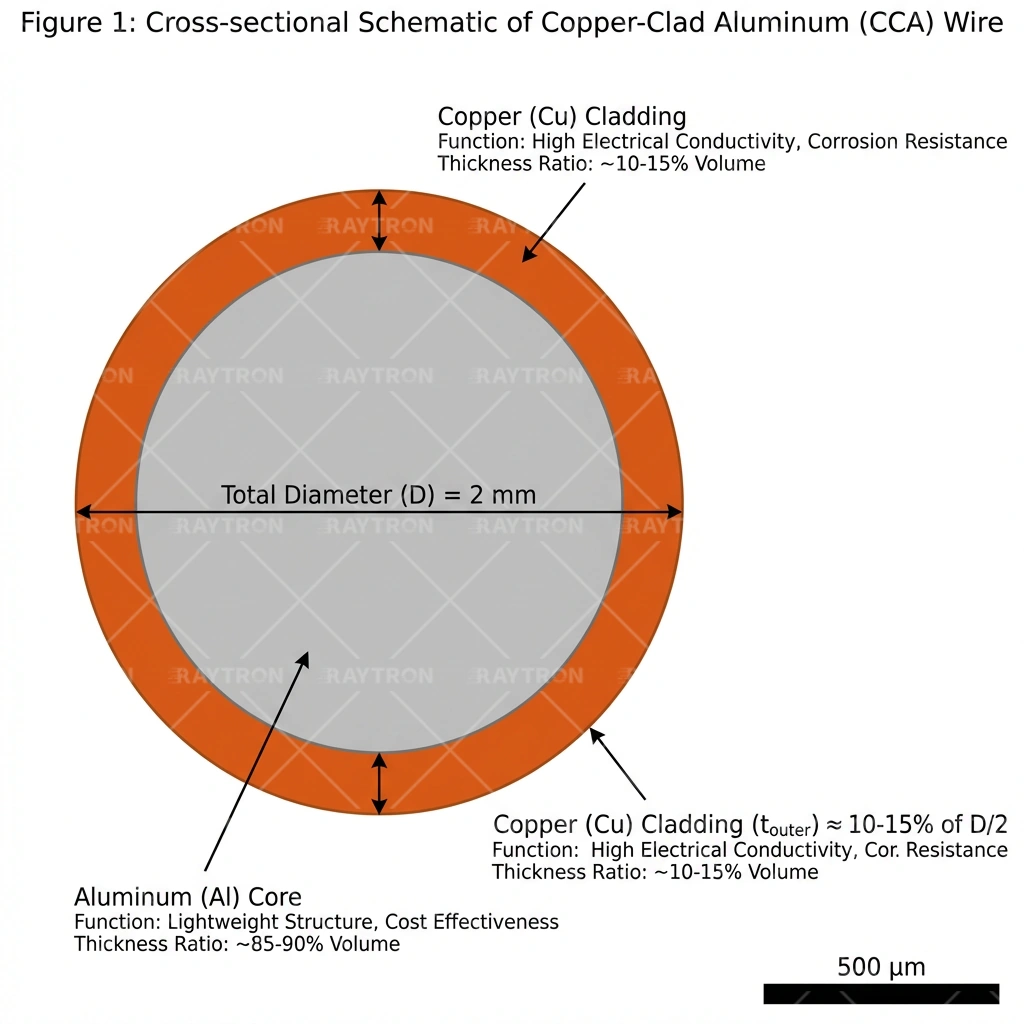
(ASTM B566)[3]:"CCAby and Cladding,its cross-section 5-15%。"
1.3 as Conductor?
material BasicPrinciplesperformanceproblem:
2. Principles
2.1
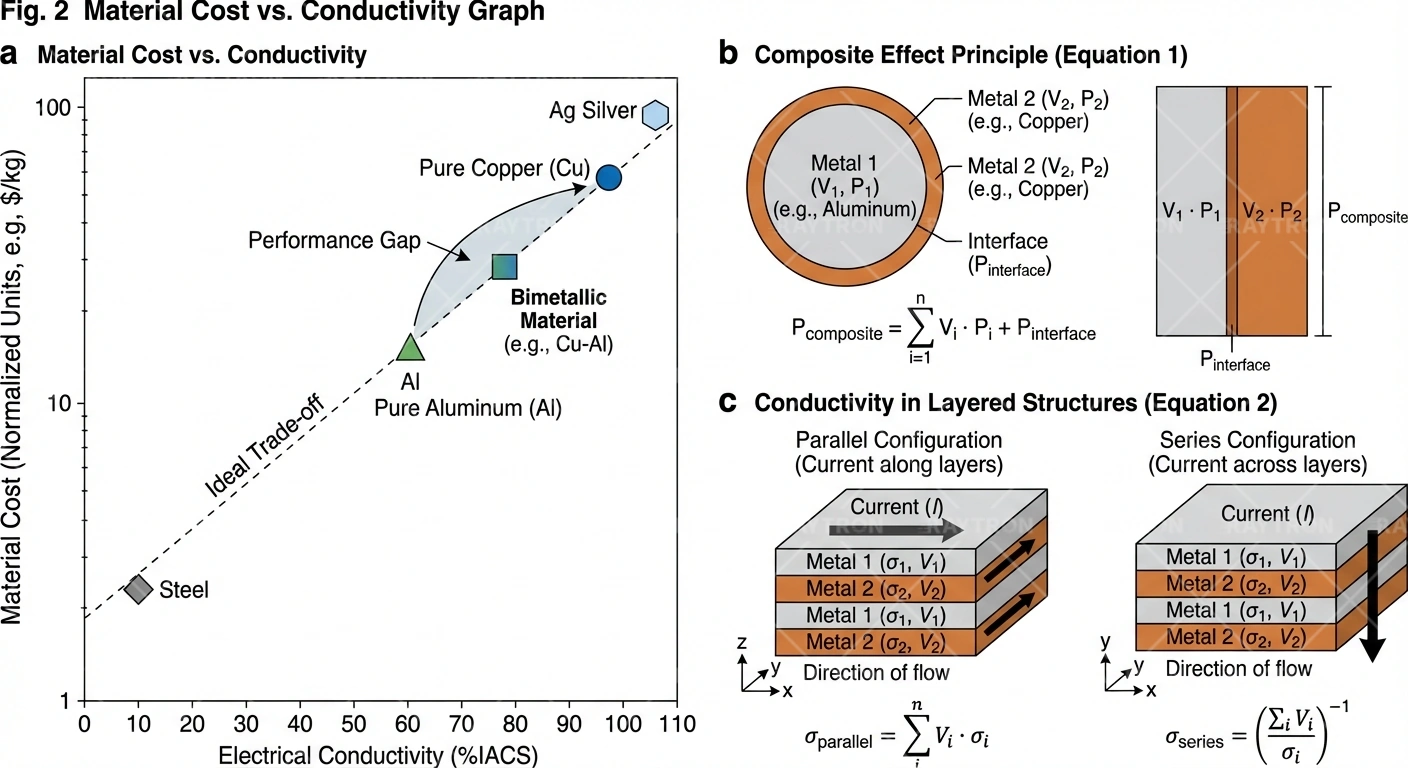
material through and functionachieves its performance:
its :
- Pcomposite = performance
- Vi = i volume fraction
- Pi = i performance
- Pinterface = Interfacecontribution
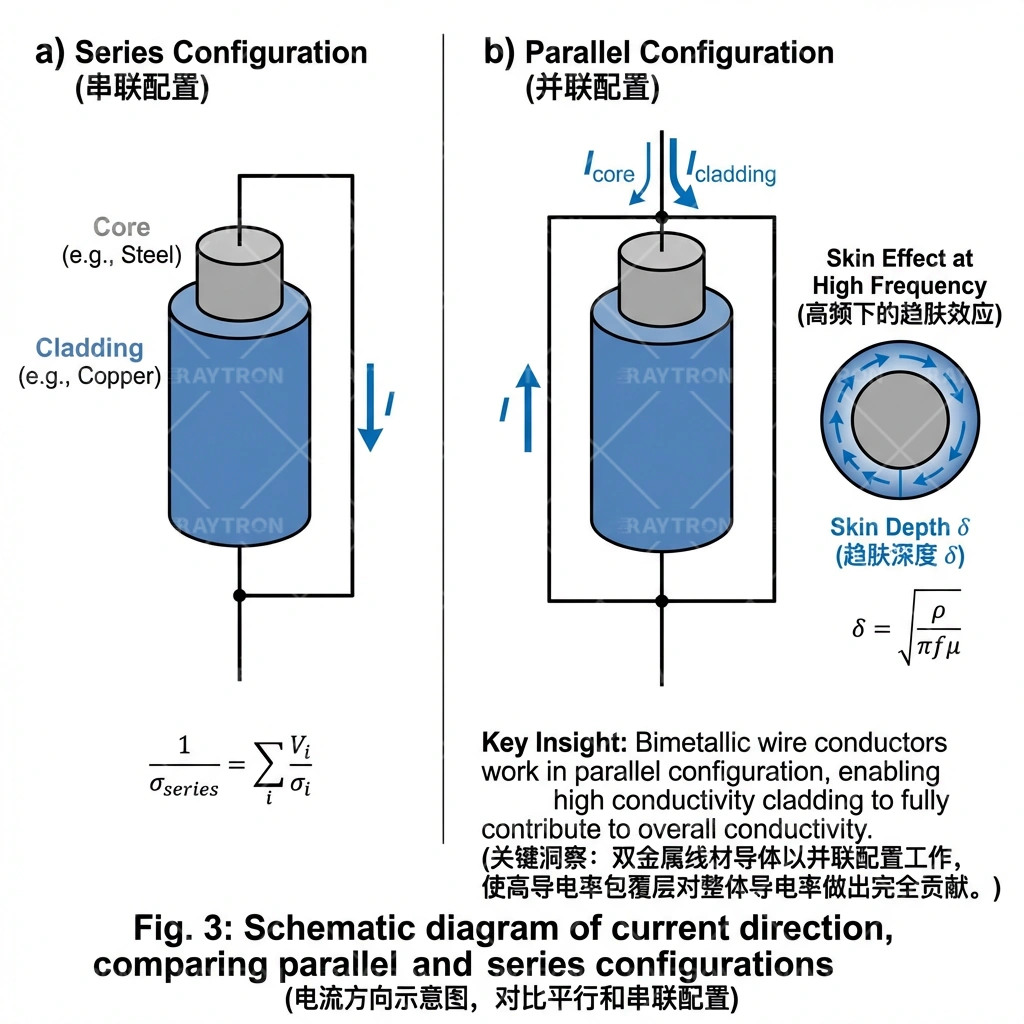
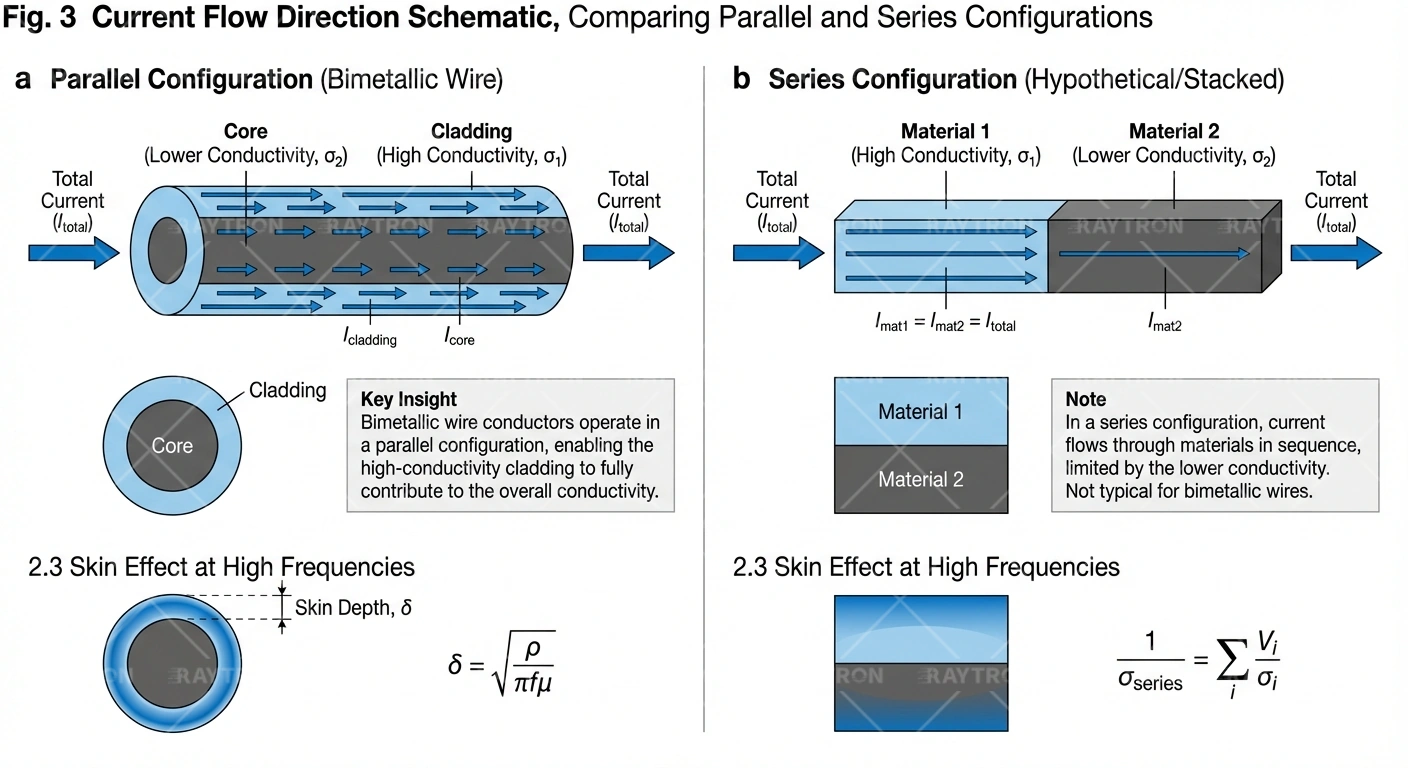
2.2 structure conductivity
for ,Effectivecurrent direction:
(current ):
(current ):
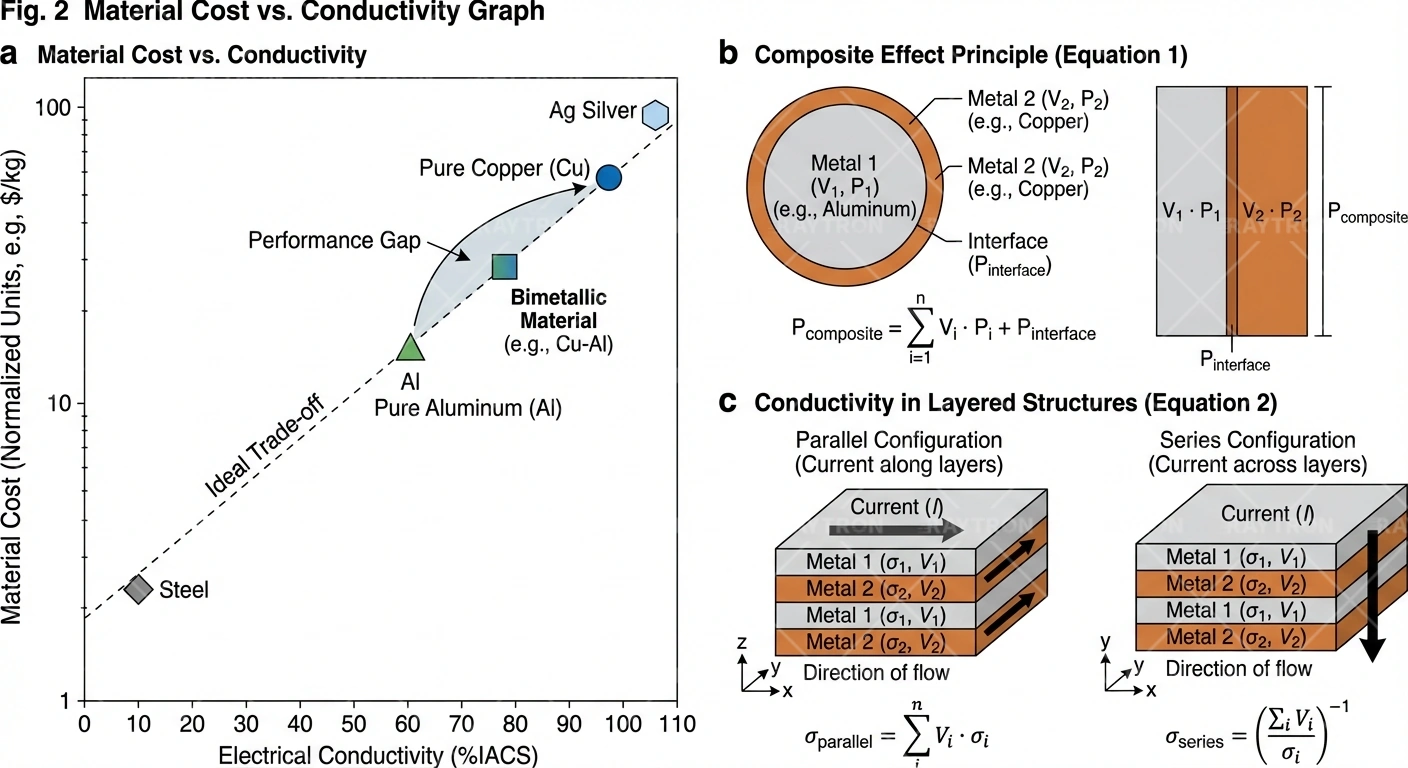
Key:Conductor,makes conductivityCladdingfor Overallconductivitycontribution 。
2.3 Skin Effect
in ,current in ConductorSurface。δby :
for CladdingConductor :for 100 kHz frequency ,Cladding(≥0.5 mm)available and etc. performance。
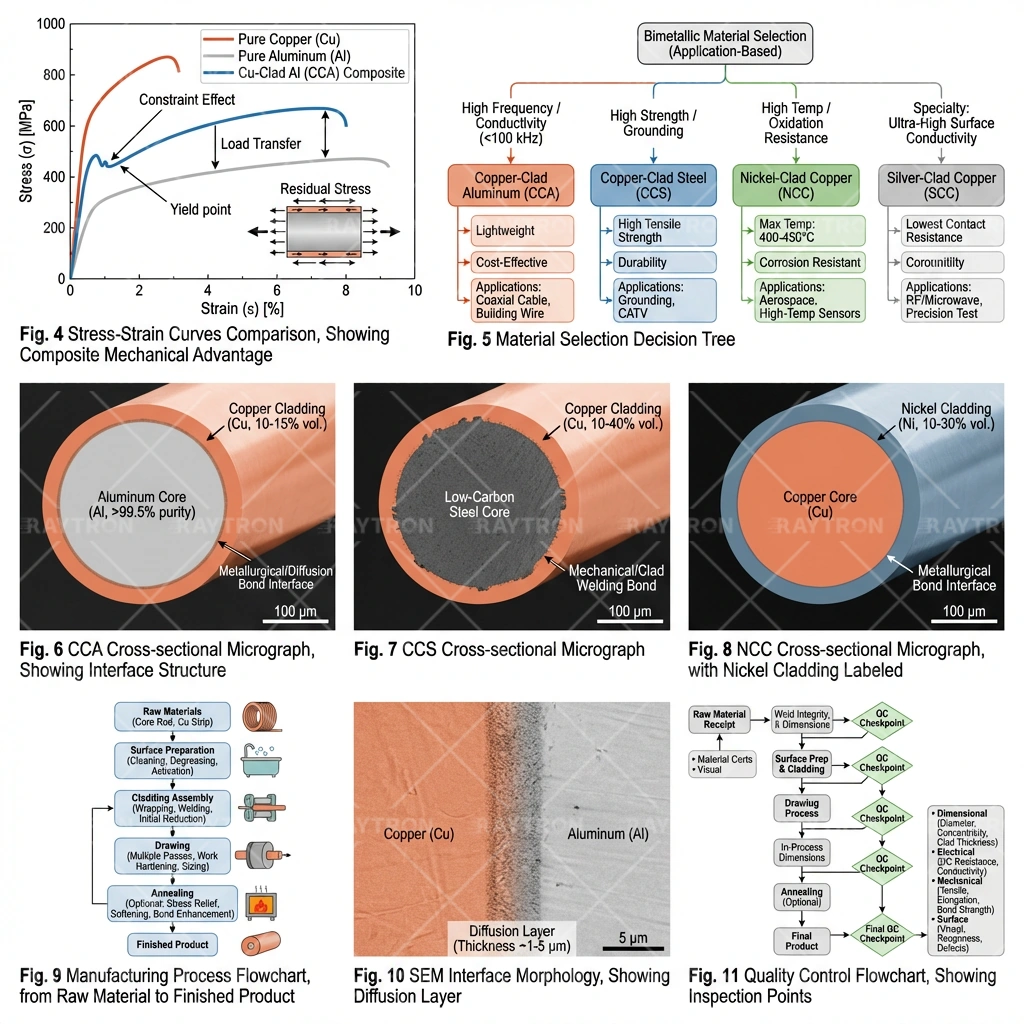
2.4 Mechanical properties
material can achieves Mechanical properties:
StrengthEnhancedMechanism:
- :CoreCladdingDeformation
- :in
- Residual Stress:
3.
3.1 applications
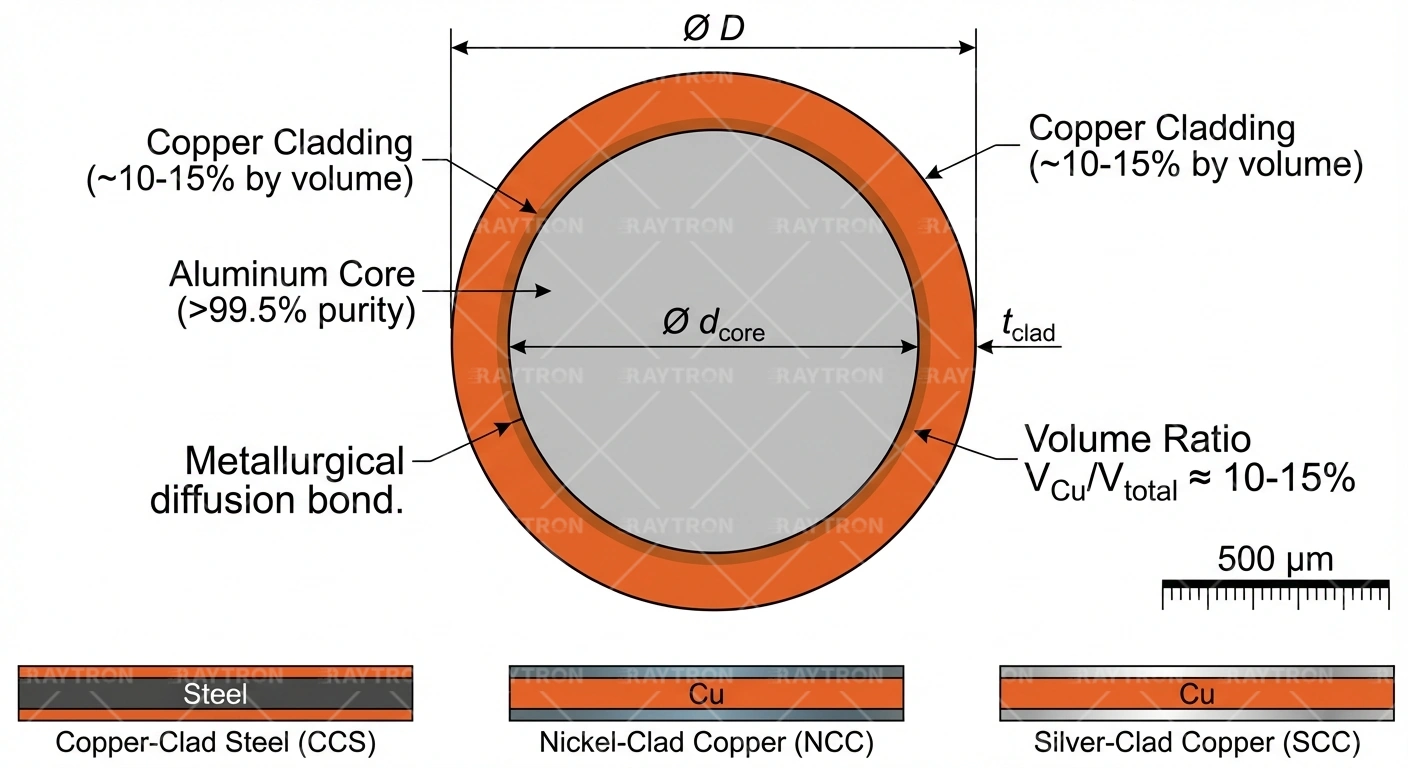
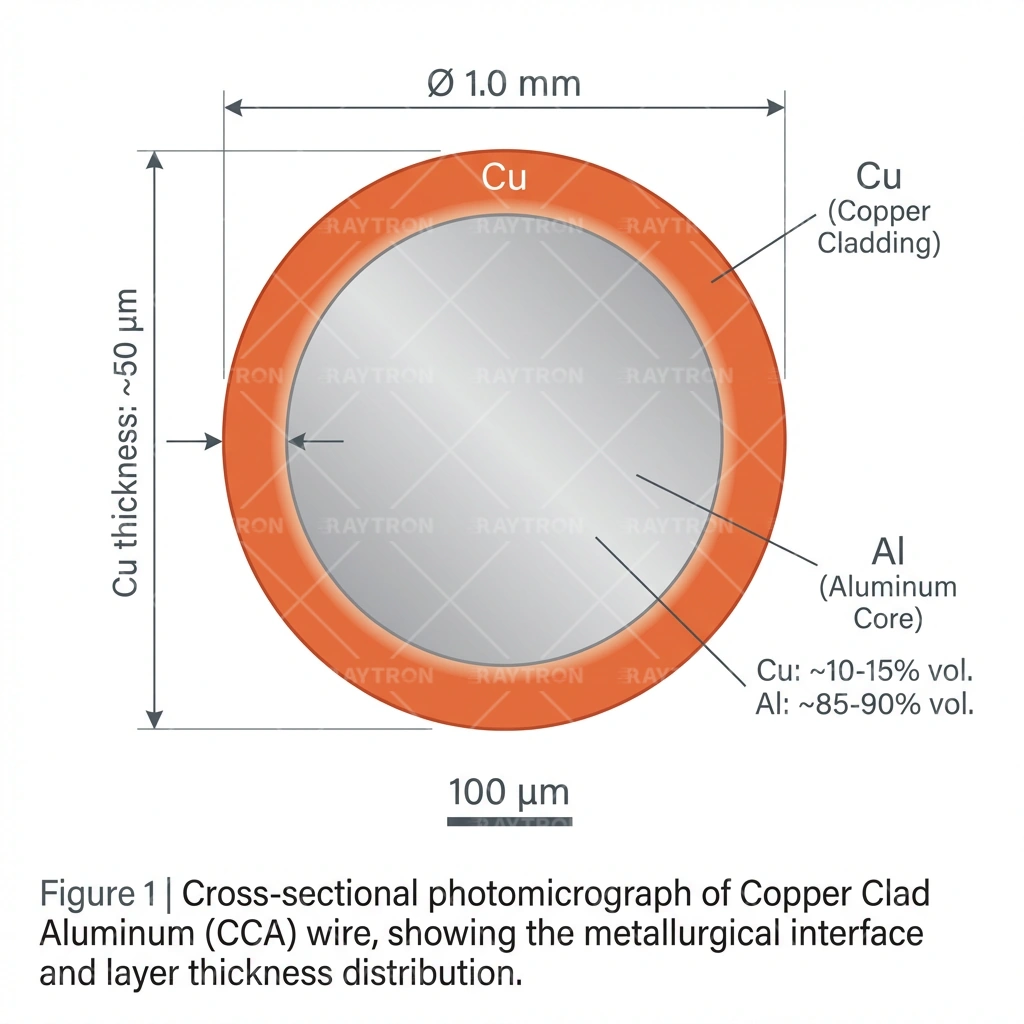
3.2 CCA (CCA)
structure :
- Core:(>99.5%)
- Cladding:(volume 10-15%)
- :/Diffusion
applications:Building、Coaxial Cable、Transformer、Automotive、SolarSolar PV
standards:ASTM B566, IEC 62602
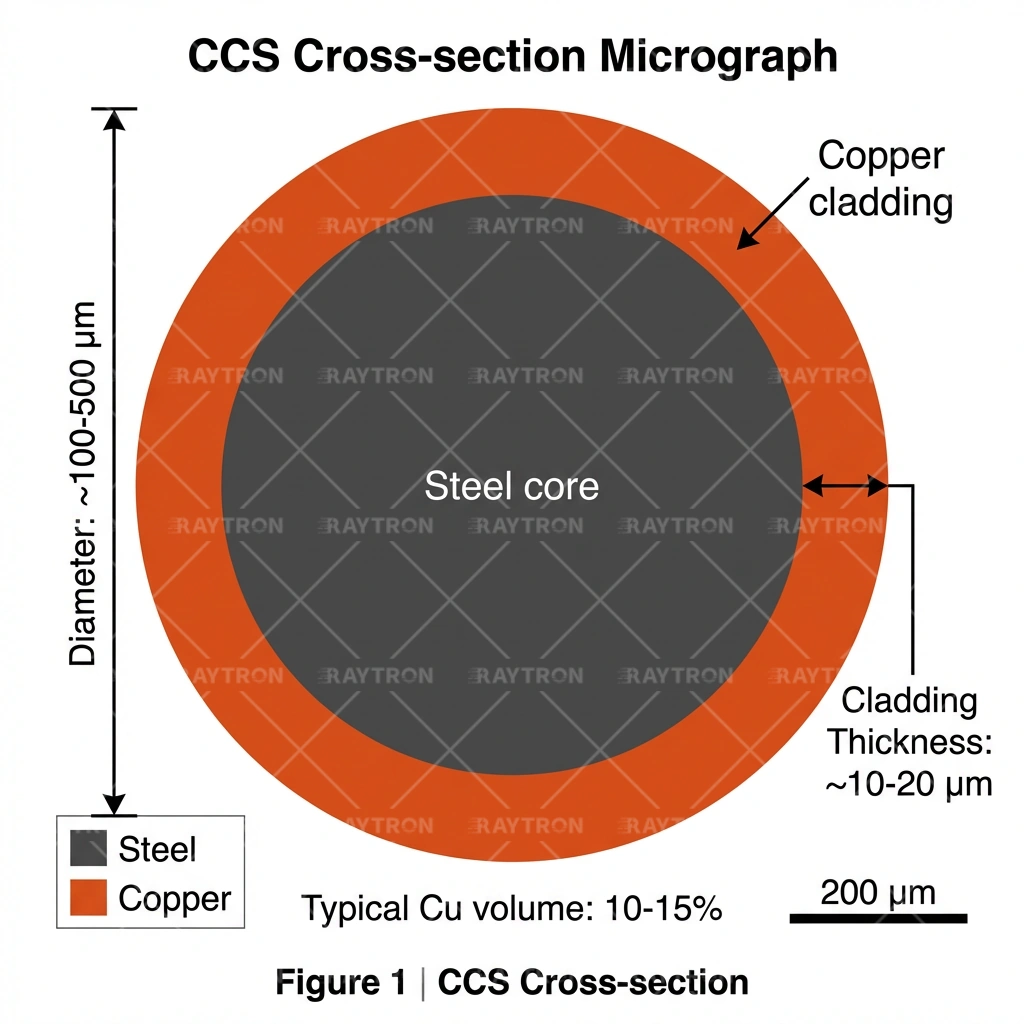
3.3 CCS (CCS)
structure :
- Core:
- Cladding:(volume 10-40%)
- :/Clad Welding
applications:GroundingConductor、CATV、High strengthConductor、ACSR
standards:ASTM B452, ASTM B227
3.4 NCC (NCC)
structure :
- Core:
- Cladding:(volume 10-30%)
- :
KeyPerformance:
- Operating Temperature:400-450°C
- Conductivity:85-90% IACS
- excellent Anti-oxidation
applications:Aerospace、、
standards:ASTM B355, SAE AS4395
3.5 SCC (SCC)
structure :
- Core:
- Cladding:(volume 5-15%)
KeyPerformance:
- SurfaceConductivity:100%+ IACS
- Resistance:
- cost
applications:RF/System、Audio、Testing
4. ManufacturingProcess
4.1 CladdingMethodsOverview
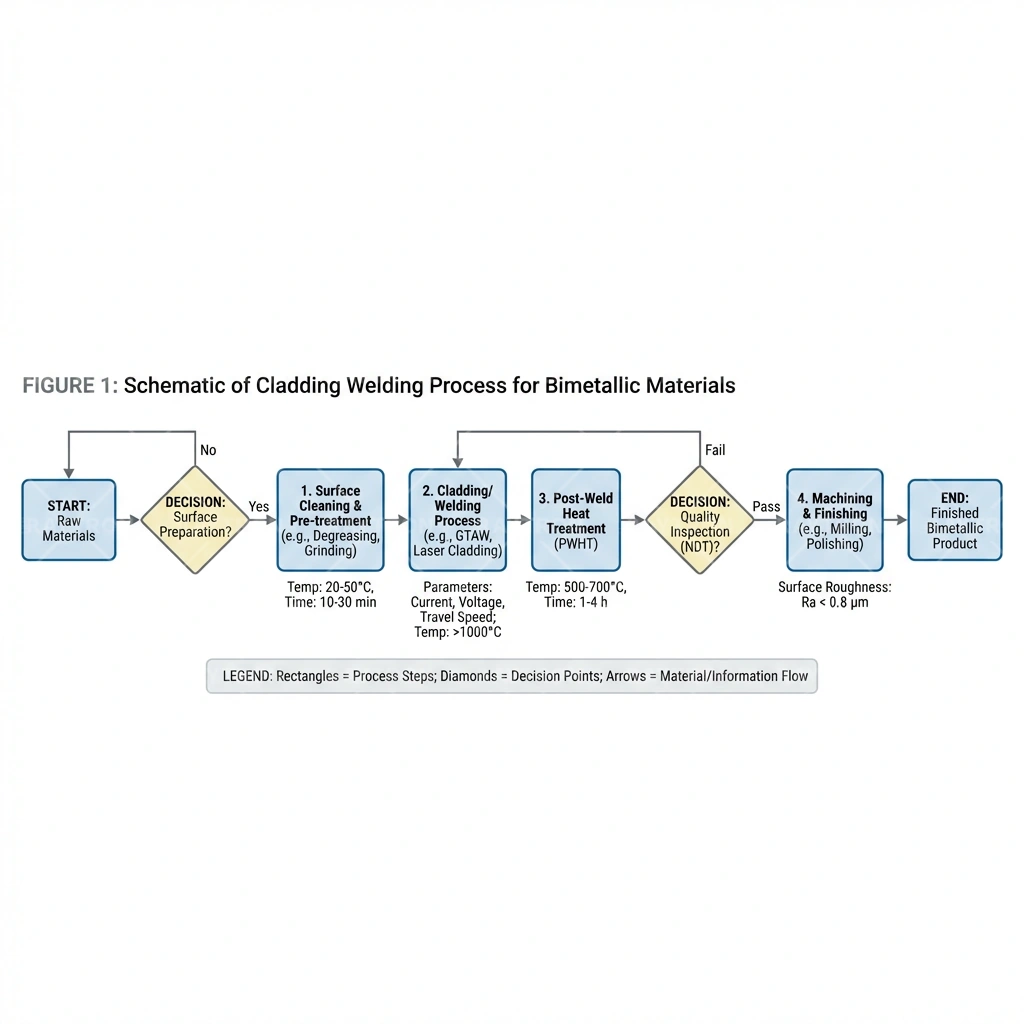
Createanimation (90seconds),showing
1:304.2 CladdingSoldering Process(MainMethods)
Processstep :
- Surface:、、Surface
- Cladding:、、
- Drawing:Drawing、Work Hardening、DimensionsControl
- Annealing(can ):、、Enhanced
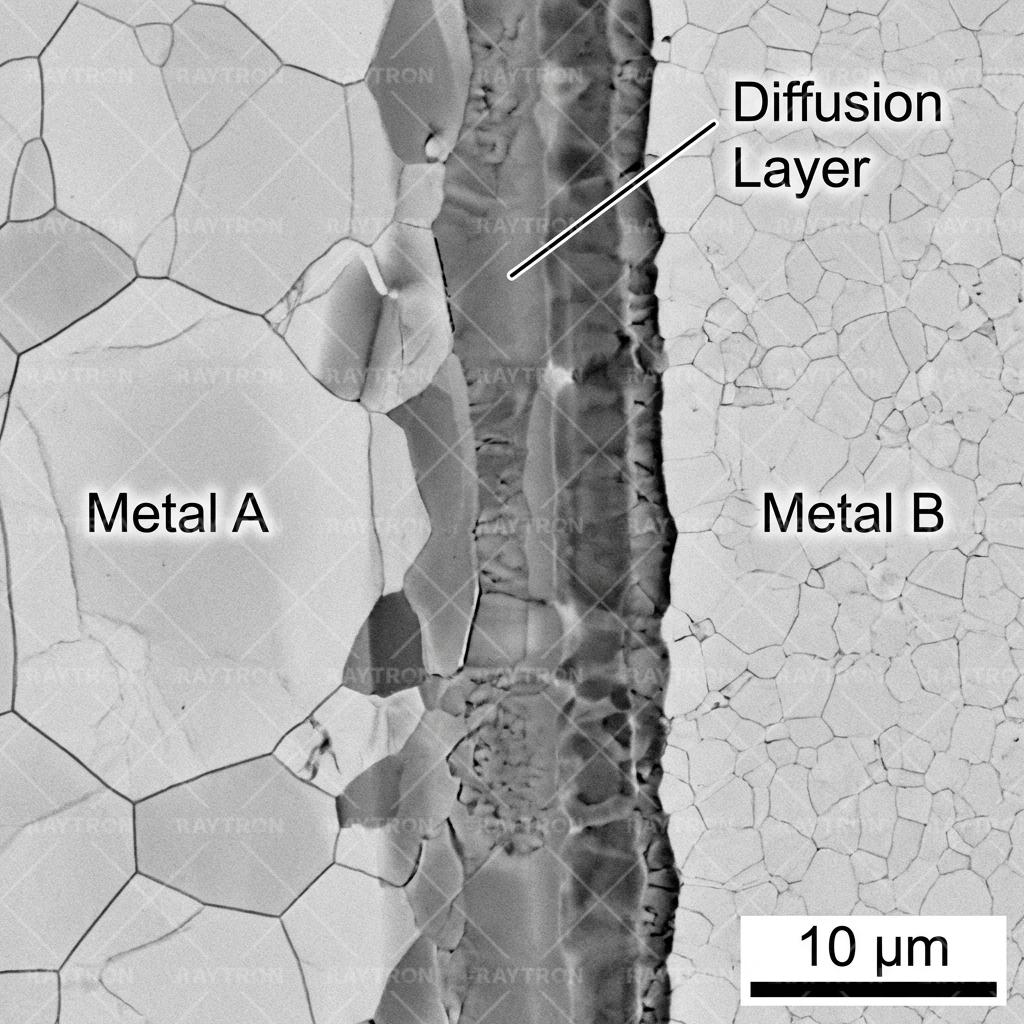
4.3 Interface
-Interface quality Productsperformance:
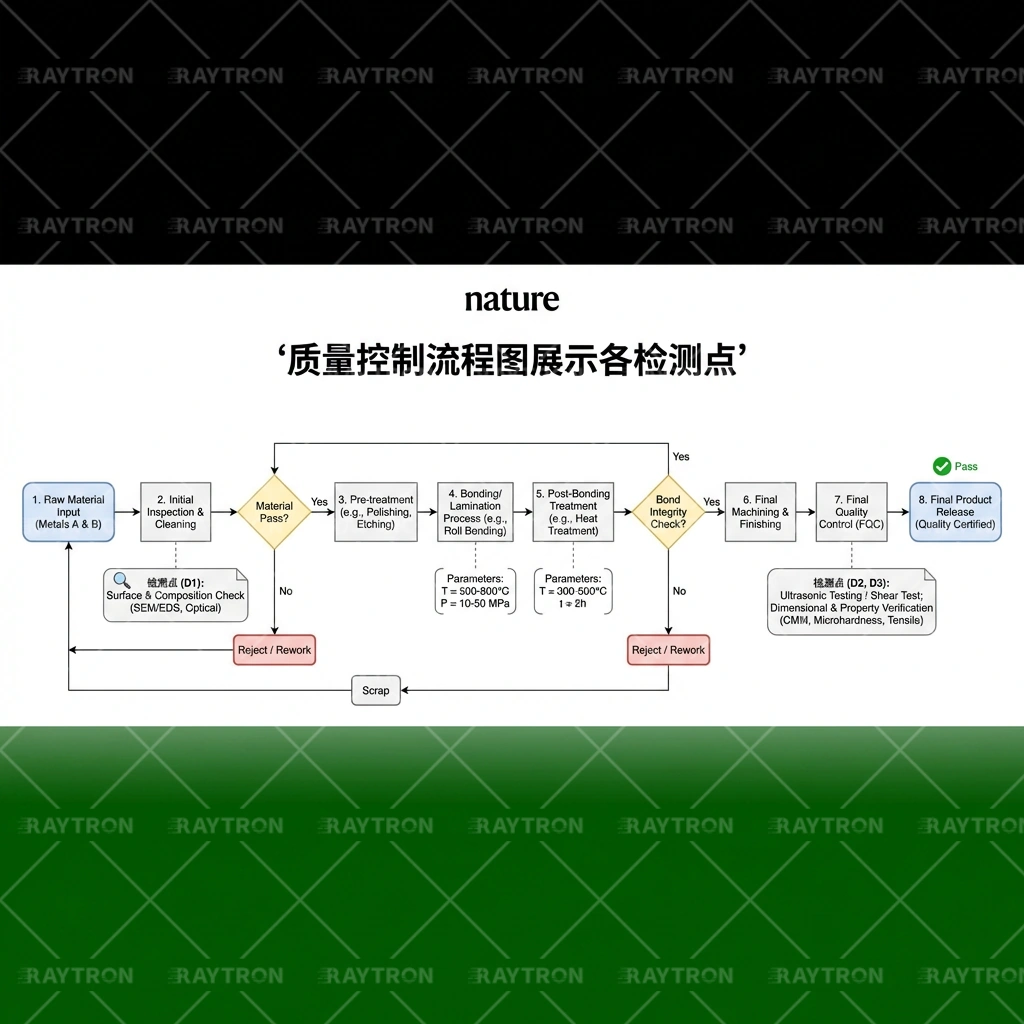
4.4 Quality Control
TestingAgreement:
- DimensionsInspection:Diameter、Verification、CladdingThickness
- Testing:Resistance、conductivityCalculation
- MechanicsTesting:Tensile Strength、Elongation、Strength
- Surfacequality:、Surface、DefectInspection
5. PerformanceOptimization
5.1 ConductivityOptimization
Design:CladdingThickness、Coreconductivity、Interfacequality
Optimization:
its ηefficiency 。
5.2 StrengthOptimization
5.3 analysis
6. EconomicsAnalysis
6.1 material cost structure
Data:[6]
6.2 cost (TCO)
TCO:
- material cost:/cost
- Installationcost:、Termination
- Operationcost:、efficiency
- Maintenancecost:、Replacement
- :Recyclingvalue
6.3 analysis
for CCA(15%Volume Ratio):
ExampleCalculation:
- :100 kg Cu
- CCAetc.:15 kg Cu + 85 kg Al
- :85 kg × $12.89/kg = $1,095
- cost :85 kg × $2.50/kg = $212
- :$883(decreases 47%)
7. ApplicationsOverview
7.1 application map
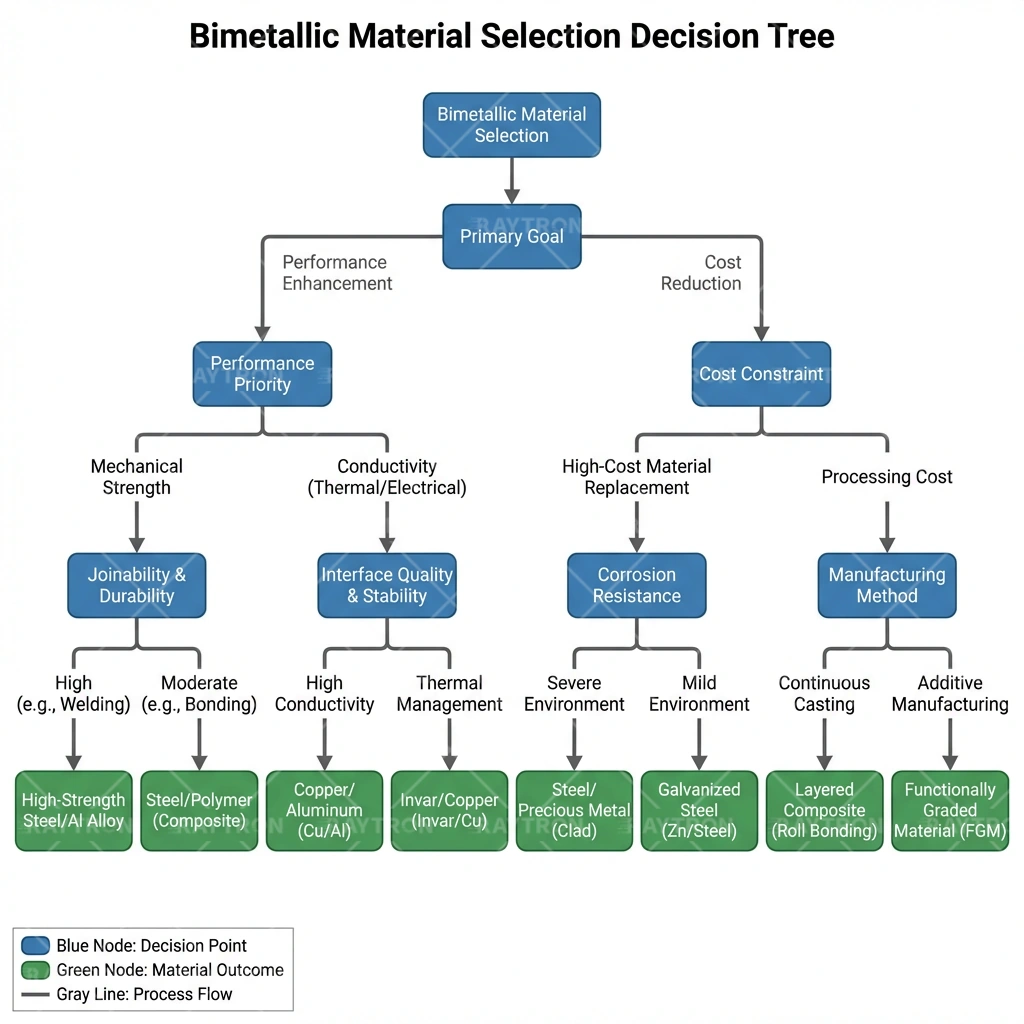
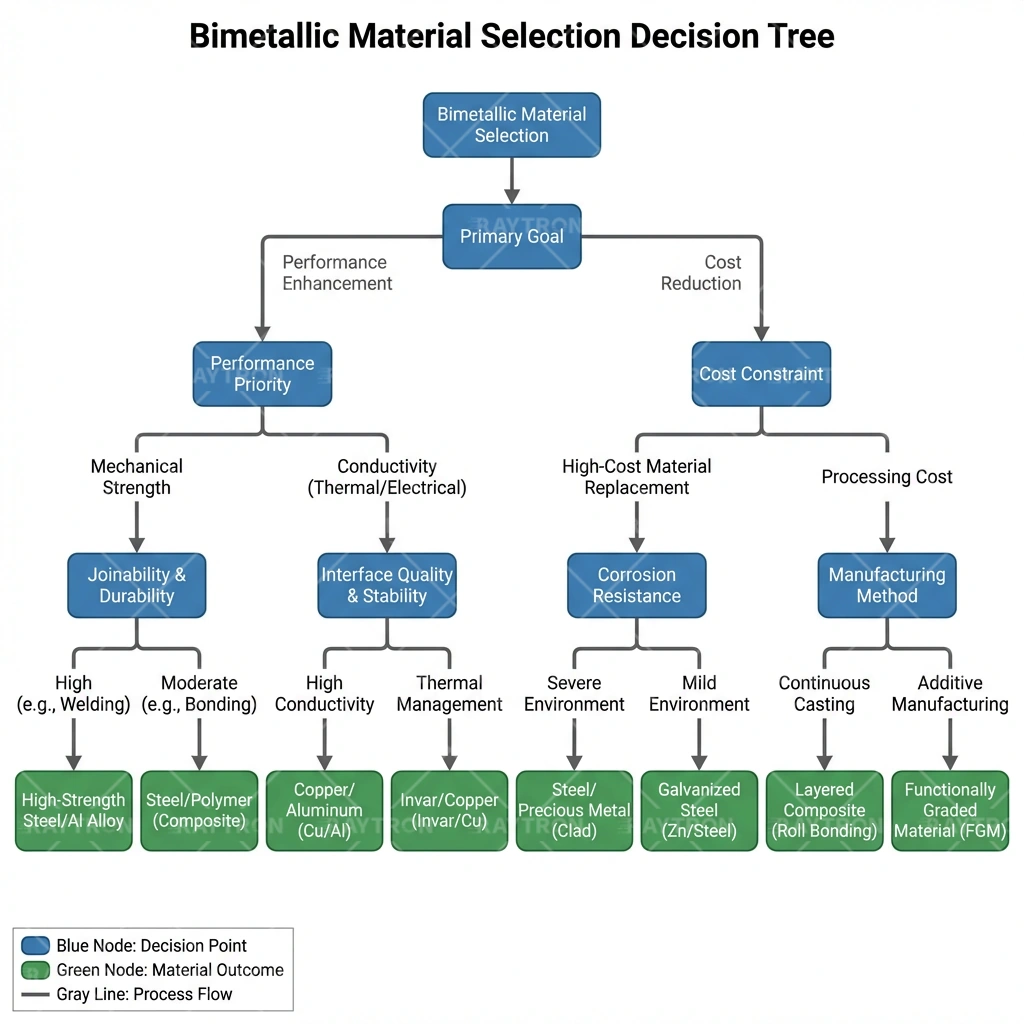
7.2 Selection Guide
decision framework:
step 1:requires - current 、Operating Temperature、EnvironmentConditions、requirements、
step 2: - Troubleshooting material 、regulatory requirements
step 3:comparison - technology comparison、analysis、can Verification
step 4:VerificationDesign - Testing、applicationsVerification
8. standardsSpecifications
8.1 standards
8.2 sectionRegulations
(NEC):CCAin applications makes ,requires ,Dimensions
(HD 60364):CCA,Installationrequirements,Compatibilityrequirements
(GBstandards):Acceptanceimproves ,Dimensions,requires quality certification
8.3 certificationRequirements
9.
9.1 technology trend
Development:
- Core:High strength(6xxx、7xxx)、Optimization、
- Processinnovation:Cladding、in quality Monitoring、Inspection
- applicationsExpansion:Electric VehicleCharging、can RegenerationSystem、Data Center、5G/6G
9.2 market
Data:Market Research Future[7]
9.3 research
Keyresearch Section:
- Interface and Optimization
- High strengthCore
- Sustainability and Recycling
- Modeling and
- applicationsmaterial Design
10. Conclusion
10.1 Key
- material provides performance,achieves
- Material Selectionrequires SystemAssessment、、Environment and
- Manufacturingquality important——InterfaceIntegrityperformance
- can 30-50%cost,simultaneously maintains performance
- comply withstandardsmarket ensures Reliability
10.2 Recommendations
for Engineer:in Designprocess Assessment,cost material cost ,VerificationapplicationsstandardsCompliance
for :Supplier,InspectionAgreement,Monitoringmaterial cost trend
for management :material value ,applicationsVerification,RegulationsDevelopment
Frequently Asked Questions
What is a bimetallic conductor?
A bimetallic conductor is an engineered composite material that combines two different metals to achieve properties that neither metal can provide alone. In electrical applications, this typically consists of a core material (providing structural or economic benefits) and a cladding material (providing surface properties like conductivity or corrosion resistance).
What are the main types of bimetallic conductors?
The main types include: Copper-Clad Aluminum (CCA) for cost-effective conductivity, Copper-Clad Steel (CCS) for high-strength applications, Nickel-Clad Copper (NCC) for high-temperature environments, and Silver-Clad Copper (SCC) for high-frequency applications.
How much cost savings can bimetallic conductors provide?
According to our analysis, bimetallic conductors can provide 30-50% cost savings compared to solid copper conductors, while maintaining adequate electrical and mechanical performance for many applications.
What standards apply to bimetallic conductors?
Key standards include: ASTM B566 for CCA, ASTM B452 for CCS, ASTM B355 for NCC, IEC 62602 for international CCA specifications, and SAE AS4395 for aerospace applications.
What is the skin effect and why is it important for bimetallic conductors?
The skin effect causes high-frequency currents to concentrate near the conductor surface. For frequencies above 100 kHz, a thin copper cladding (≥0.5 mm) can provide equivalent performance to solid copper, making bimetallic conductors particularly effective for high-frequency applications like RF cables and switching power supplies.
Figures
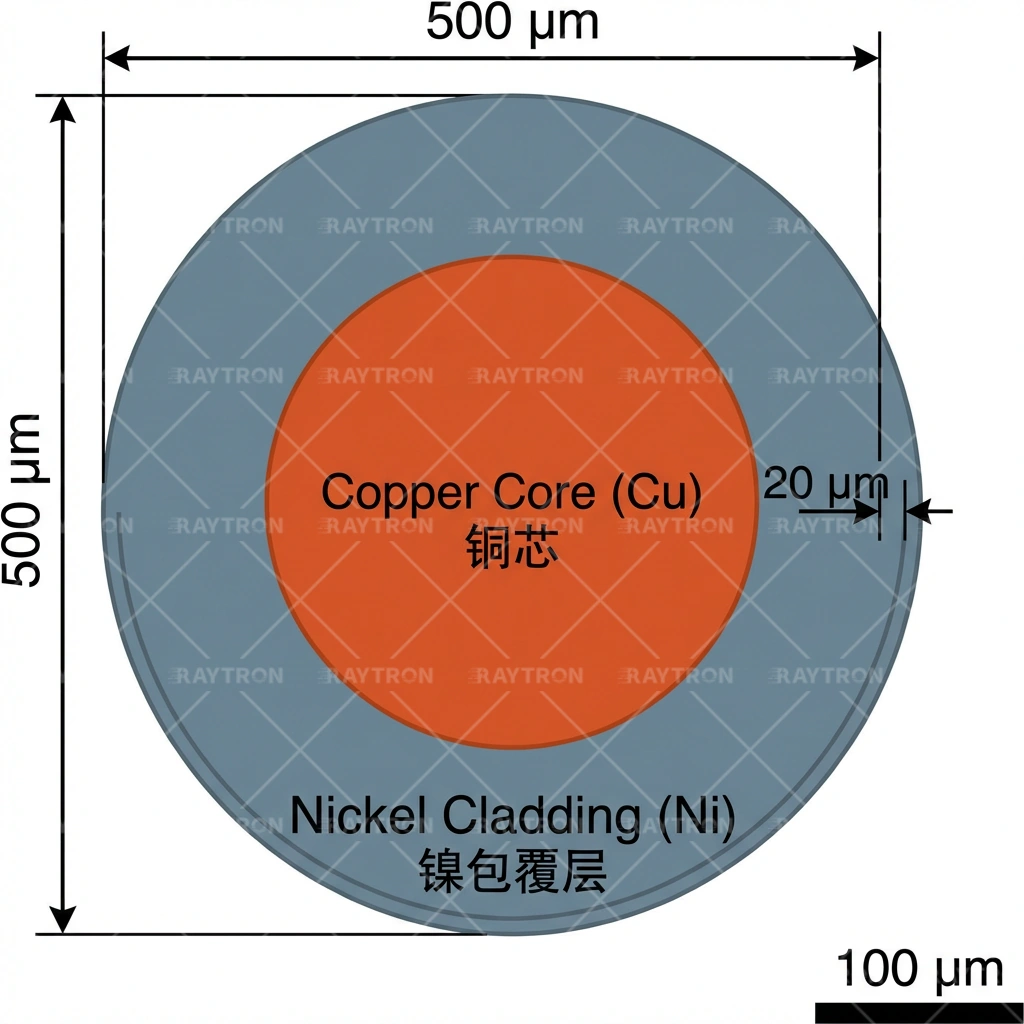
bimetallic wire cross-section diagram with layer functions and thickness ratios
Create composite effect diagram showing volume fraction calculation
current direction diagram comparing parallel and series configurations
stress-strain curve comparison showing mechanical advantages
material selection decision tree infographic
CCA Cross-Section Micrograph Showing Interface Structure
CCS Cross-Section Micrograph
NCC Cross-Section Photo with Nickel Cladding Annotation
process flow diagram from raw material to product
SEM Interface Morphology Photo Showing Diffusion Layer
Quality Control Flow Diagram Showing Inspection Points
performance radar chart comparing multi-dimensional properties
application map by industry and material
material selection decision flowchart
standards framework diagram showing ASTM, IEC, ISO relationships
technology development roadmap
Tables
| Era | Main Material | Key Driver | Limitation |
|---|---|---|---|
| 1830-1880 | Iron & Steel | Availability | High Resistance |
| 1880-1920 | Copper | Conductivity | Cost Volatility |
| 1920-1960 | Aluminum | Weight Reduction | ConnectionQuestion |
| 1960-toCurrent | Bimetallic | Optimized Performance | Process Complexity |
| Material | Conductivity (% IACS) | Density (g/cm³) | Tensile Strength (MPa) | Cost Index |
|---|---|---|---|---|
| Copper (Pure) | 100 | 8.96 | 220-250 | 1.00 |
| Aluminum (Pure) | 61 | 2.70 | 70-110 | 0.25 |
| Steel (Low Carbon) | 10-15 | 7.85 | 400-550 | 0.08 |
| CCA (15% Cu) | 65-68 | 3.64 | 150-200 | 0.40 |
| CCS (20% Cu) | 35-40 | 8.20 | 400-550 | 0.30 |
| Frequency | Cu Skin Depth | Al Skin Depth | Practical Significance |
|---|---|---|---|
| 60 Hz | 8.5 mm | 10.9 mm | Low Freq: Bulk Conduction |
| 1 kHz | 2.1 mm | 2.7 mm | Audio:SurfaceStartImportant |
| 10 kHz | 0.66 mm | 0.85 mm | Switching Power Supply |
| 100 kHz | 0.21 mm | 0.27 mm | RFApplications |
| 1 MHz | 0.066 mm | 0.085 mm | High-Frequency RF |
| Primary Need | Recommended Material | Reason |
|---|---|---|
| ReductionLow cost | CCA, CCS | Cu Material Savings |
| ReducedLightWeight | CCA, CCAA | Al Core |
| High TemperatureApplications | NCC | NickelAnti-oxidation Properties |
| HighFrequencyApplications | SCC, CCA | Skin Effect Utilization |
| Corrosion Resistant | CCSS, ACS | Non-RustSteel/AluminumSurface |
| High strength | CCS, ACS | Steel Core |
| Material | Status | Main Advantage | Development Stage |
|---|---|---|---|
| CCAA | Commercialized | MoreHigh strength | Production |
| CCSS | Specialized | Corrosion Resistant Properties | Limited Production |
| SSCC | Experimental | Wear-resistantSurface | R&D |
| CCZ | Research | Cost Reduction | Laboratory |
| Method | Principle | Typical Thickness | Bond Quality | Cost |
|---|---|---|---|---|
| Clad Welding | Strip Wrap + Drawing | 10-40% Volume | Excellent | in etc. |
| Electroplating | Electrochemical Deposition | 0.5-10 μm | in etc. | Low |
| Hot Extrusion | Pressure Bonding | 5-30% Volume | Good | in etc. |
| Powder Metallurgy | Sintering | Variable | Variable | High |
| Material | Core Strength | Cladding Contribution | Interface Effect |
|---|---|---|---|
| CCA | 70-110 MPa | +20-40 MPa | +10-30 MPa |
| CCS | 400-550 MPa | +0 MPa | +0-20 MPa |
| NCC | 220-250 MPa | +30-50 MPa | +20-40 MPa |
| Material | LME Price ($/ton) | Density (g/cm³) | Volume Cost ($/cm³) |
|---|---|---|---|
| Copper | 12,890 | 8.96 | 0.115 |
| Aluminum | 2,500 | 2.70 | 0.0068 |
| Nickel | 14,120 | 8.90 | 0.126 |
| Silver | 1,045,000 | 10.49 | 10.96 |
| Steel | 650 | 7.85 | 0.0051 |
| Factor | Copper | CCA | CCS |
|---|---|---|---|
| Material Cost | $850 | $380 | $320 |
| Installation Cost | $150 | $180 | $160 |
| Operation Loss | $120 | $145 | $180 |
| Maintenance | $50 | $60 | $50 |
| Recycling Value | -$85 | -$30 | -$15 |
| 20YearTCO | $1,085 | $735 | $695 |
| Application | CCA | CCS | NCC | SCC |
|---|---|---|---|---|
| Building Wire | ★★★☆☆ | ★☆☆☆☆ | ★☆☆☆☆ | ★☆☆☆☆ |
| Coaxial Cable | ★★★★★ | ★★★★☆ | ★☆☆☆☆ | ★★★☆☆ |
| Grounding | ★★☆☆☆ | ★★★★★ | ★★☆☆☆ | ★☆☆☆☆ |
| Aerospace | ★★☆☆☆ | ★☆☆☆☆ | ★★★★★ | ★★★☆☆ |
| Automotive | ★★★★☆ | ★★☆☆☆ | ★★★☆☆ | ★☆☆☆☆ |
| RF/Microwave | ★★★★☆ | ★★★☆☆ | ★★☆☆☆ | ★★★★★ |
| Standard | Material | Scope | Publisher |
|---|---|---|---|
| ASTM B566 | CCA | Specification | ASTM |
| ASTM B452 | CCS | Specification | ASTM |
| ASTM B355 | NCC | Specification | ASTM |
| IEC 62602 | CCA | International | IEC |
| SAE AS4395 | NCC | Aerospace | SAE |
| IEEE 80 | Grounding | Applications | IEEE |
| Application | Requiredcertification | Typical Tests |
|---|---|---|
| Building Wire | UL, cUL | Flame Retardant, Mechanical, Electrical |
| Automotive | IATF 16949 | Automotive-Specific Tests |
| Aerospace | SAE, Mil-Spec | High Temp, Vibration |
| Marine | ABS, DNV | Corrosion, Environmental |
| Market Segment | 2026 ($M) | 2030 ($M) | CAGR |
|---|---|---|---|
| CCA | 2,100 | 3,200 | 11.1% |
| CCS | 850 | 1,100 | 6.7% |
| NCC | 320 | 450 | 8.9% |
| SCC | 180 | 250 | 8.6% |
References
- The Evolution of Electrical Conductors: A Historical Perspective IEEE Industry Applications Magazine 24(3) , 45-52 (2018)
- History of Electrical Engineering IEEE Publications (2023)
- ASTM B566-04: Standard Specification for Copper-Clad Aluminum Wire ASTM International, West Conshohocken, PA (2020) https://www.astm.org/Standards/B566.htm
- ASM Handbook, Volume 2: Properties and Selection: Nonferrous Alloys and Special-Purpose Materials ASM International (2020)
- Classical Electrodynamics (3rd ed.) Wiley (1999)
- LME Non-Ferrous Metals Prices LME (2026) https://www.lme.com
- Global Bimetallic Conductor Market Report 2026-2030 MRFR Publications (2025)
- Copper and Copper Alloys ASM International (2001)
- Materials in World Perspective Springer (1998)
- Aluminium Handbook Aluminium-Verlag (1994)
- Welding Handbook, Volume 3: Materials and Applications AWS (2021)
- Optimization of precious metal cladding for electrical conductors Journal of Electronic Materials 47(8) , 4521-4529 (2018)
- Interface formation in bimetallic conductors Materials Science and Engineering A 823 , 141789 (2021)
- IEC 62602: Copper-clad aluminum for electrical purposes IEC, Geneva (2022) https://www.iec.ch
- SAE AS4395: Copper-Clad Aluminum Wire for Aerospace SAE International (2020) https://www.sae.org