
CCA vs Copper: Cost-Effectiveness Analysis
1. Introduction
CCA(CCA)as material ,in applications provides significant cost advantages。
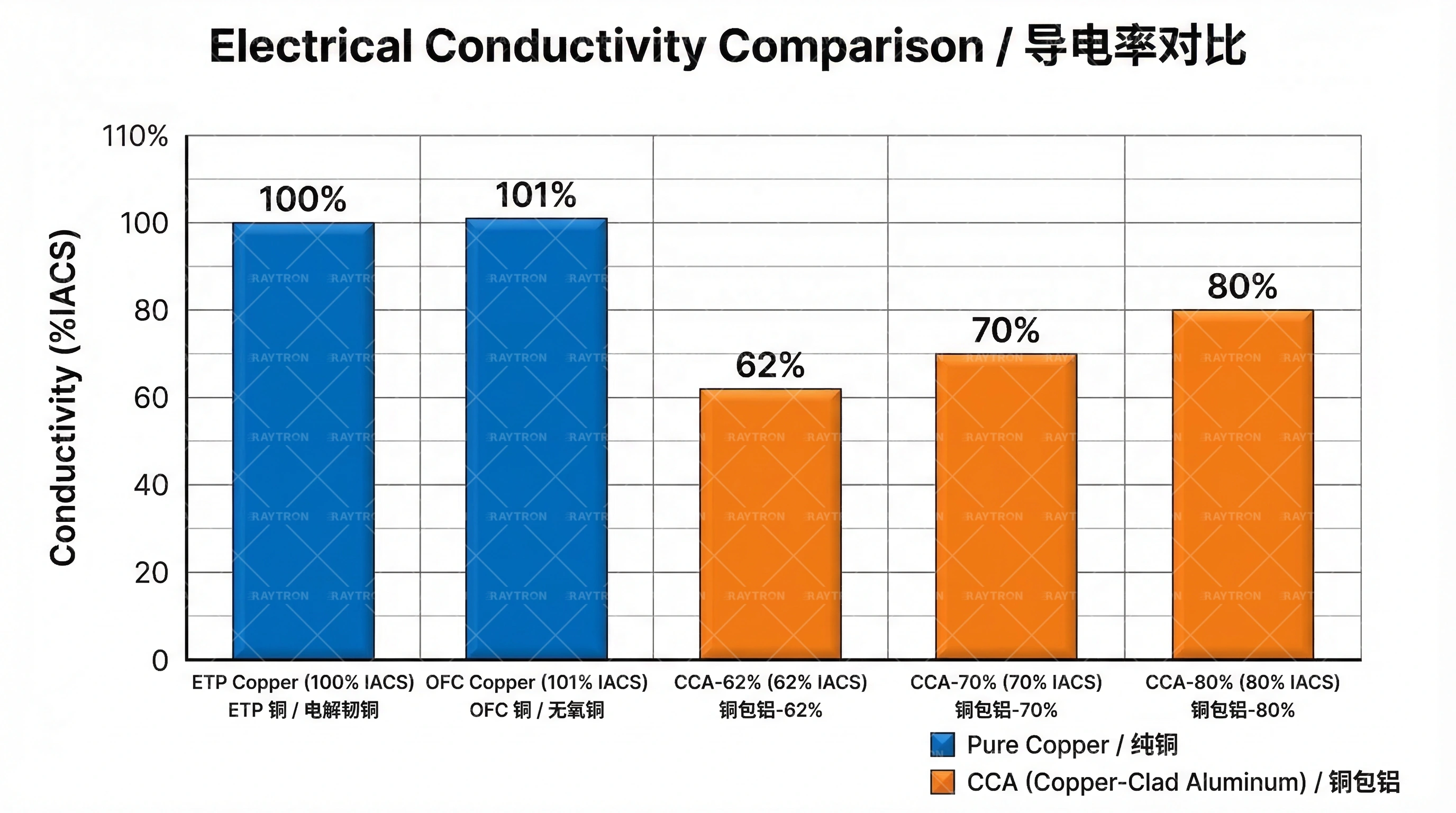
2. Electrical Performance
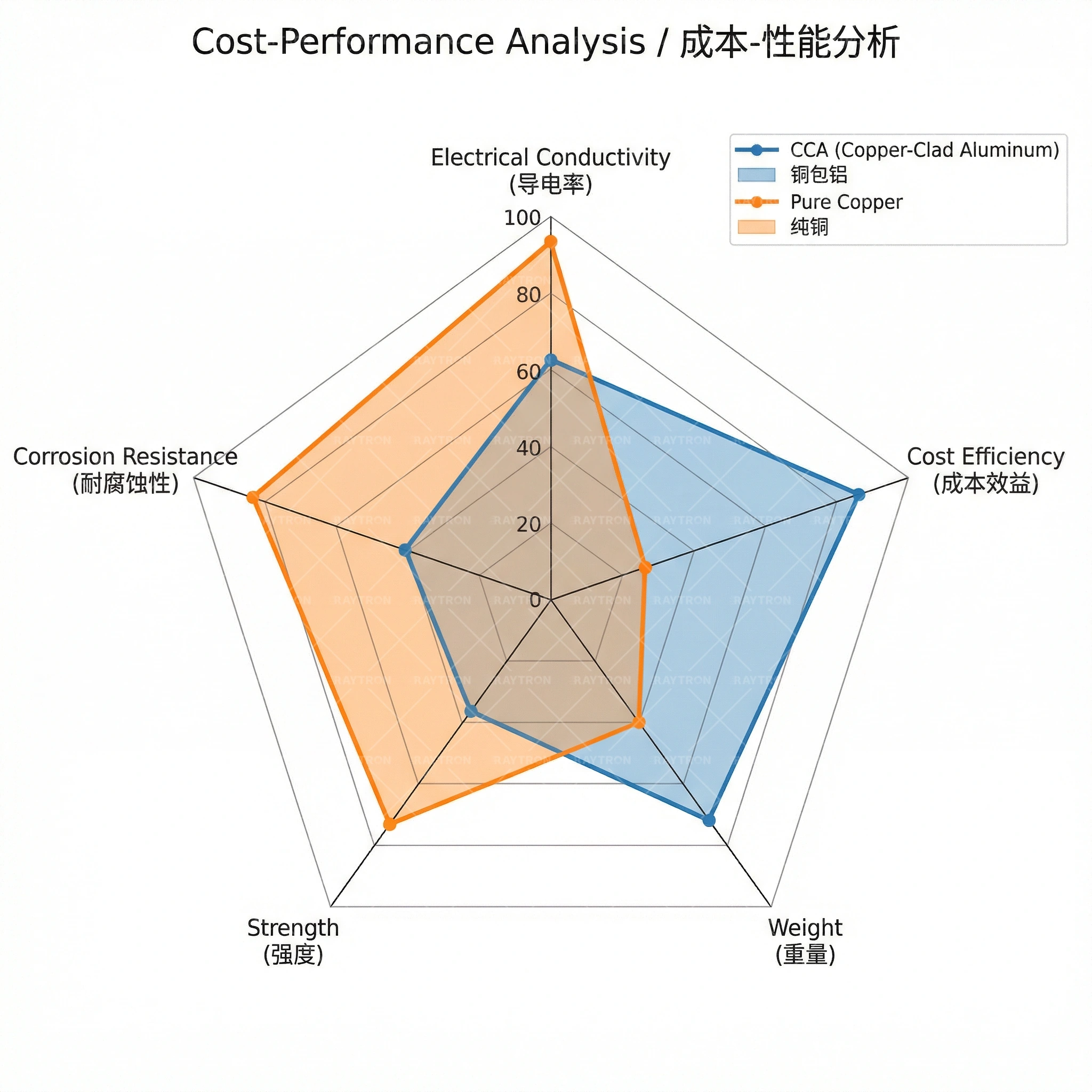
3. Mechanical Properties
4. WeightCharacteristics
CCA Densityas 40%,in Weightsensitiveapplications has significant advantages。
5. CostAnalysis
Create Cost Effective Analysis Diagram
MEDIA TODO6. Application Selection
7. Conclusion
CCAin sensitive、Weightsensitive and applications 。
Frequently Asked Questions
What is Copper-Clad Aluminum (CCA)?
CCA is a bimetallic conductor consisting of an aluminum core with a copper outer layer, manufactured through cladding and welding processes. It combines the lightweight properties of aluminum with the conductivity and connectivity advantages of copper.
How does CCA's conductivity compare to pure copper?
CCA typically achieves 62-68% IACS conductivity compared to pure copper's 100% IACS. While lower, this is sufficient for many applications including building wires, coaxial cables, and high-frequency applications where skin effect predominates.
Is CCA suitable for building wiring applications?
Yes, CCA is widely used in building wiring for applications where its conductivity is adequate. It offers significant cost and weight advantages. However, for high-current applications or where maximum conductivity is critical, pure copper may still be preferred.
What are the connection reliability concerns with CCA?
CCA provides better connection reliability than pure aluminum due to its copper surface, which eliminates the oxidation and galvanic corrosion issues associated with aluminum connections. Standard copper connectors can be used with proper installation practices.
Why is CCA particularly effective for high-frequency applications?
At high frequencies, current flows primarily on the conductor surface due to the skin effect. Since CCA has a copper outer layer, it performs equivalently to solid copper in RF applications while offering significant cost and weight advantages.
Figures
CCA vs Pure Copper Performance Radar Chart
Create Conductivity vs Temperature Curve
Create Cost-Effectiveness Analysis Chart
Tables
| Property | CCA-15% | Pure Copper |
|---|---|---|
| Conductivity (% IACS) | 62-68 | 100 |
| ResistanceRate (μΩ·cm) | 2.5-2.8 | 1.72 |
| TemperatureCoefficient (/°C) | 0.0040 | 0.00393 |
| Property | CCA-15% | Pure Copper |
|---|---|---|
| Tensile Strength (MPa) | 150-200 | 220-250 |
| ElongationRate (%) | 15-25 | 30-45 |
| Density (g/cm³) | 3.64 | 8.96 |
| Factor | CCA | Pure Copper |
|---|---|---|
| Material Cost | $0.40/kgEquivalent | $1.00/kg |
| Weight Savings | 60% | - |
| Copper Savings | 85% | - |
| Application | Recommended Material | Reason |
|---|---|---|
| Building Wire | CCA | Cost Effective |
| HighFrequency Cable | CCA | Skin Effect |
| High-Current Busbar | PureCopper | Conductivity Requirement |
| Grounding Conductor | CCA/Pure Cu | Depends on Environment |
References
- ASTM B566: Copper-Clad Aluminum Wire ASTM (2020)
- IEC 62602: Copper-clad aluminum for electrical purposes IEC (2022)