
Raytron Technical Review RESEARCH ARTICLE WP-01-06

Clad Welding Process: Core Technology for Bimetallic Bonding

Gao-Lei Xu1 *

1RAYTRON Group Technology Research Center, China

*Corresponding author

Received: 2025-12 Accepted: 2026-02 Published: 03/2026
DOI: 10.1234/raytron.2026.WP-01-06

1. Introduction

Clad WeldingProductionConductor technology ,through Claddingin Core,achieves two 。
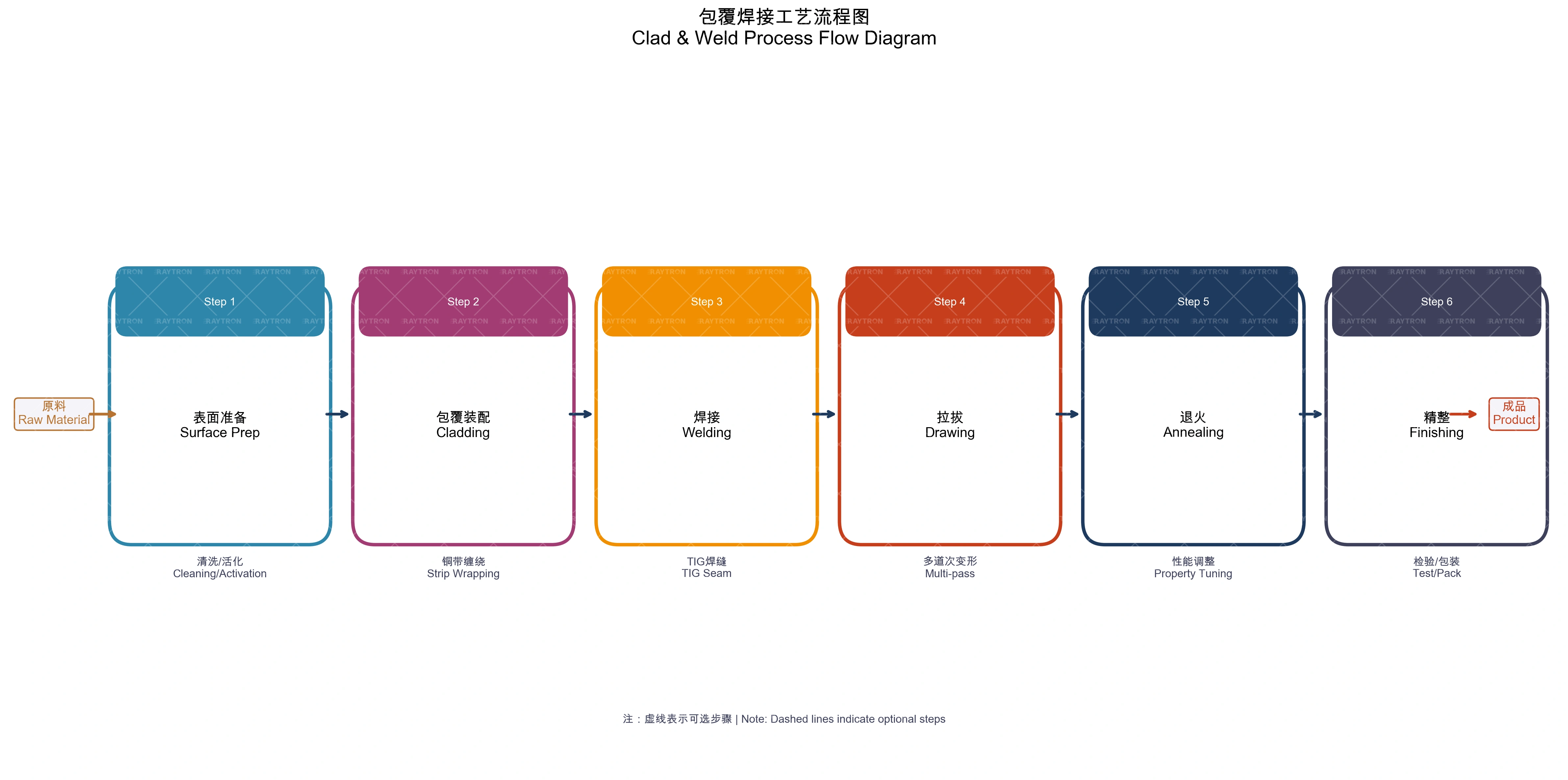
Clad Welding Process Flow
Fig. 1 Clad Welding Process Flow Diagram

animation

1:00
VIDEO TODO
Video 1 Clad Welding Process Animation

2.

2.1 Core

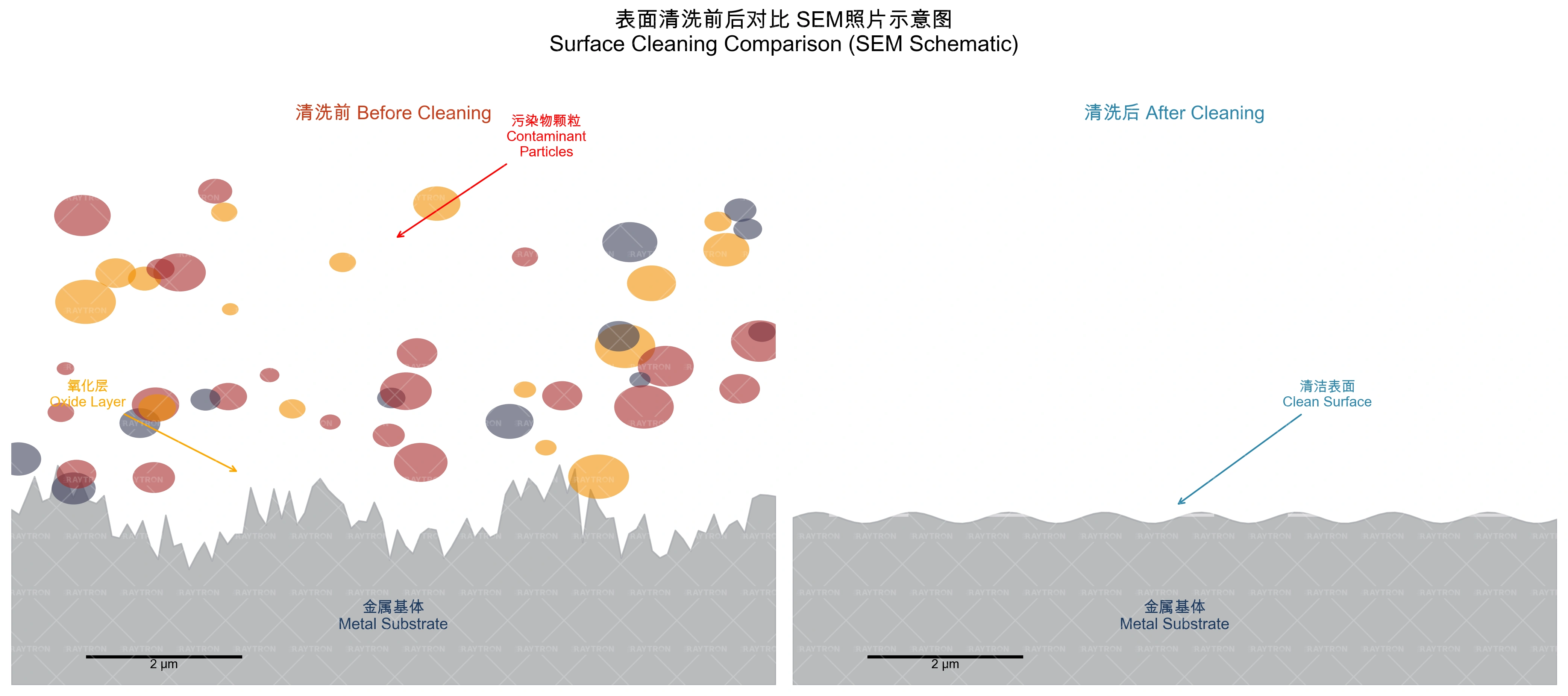
CoreSurface、,ensures 。

2.2 Claddingmaterial

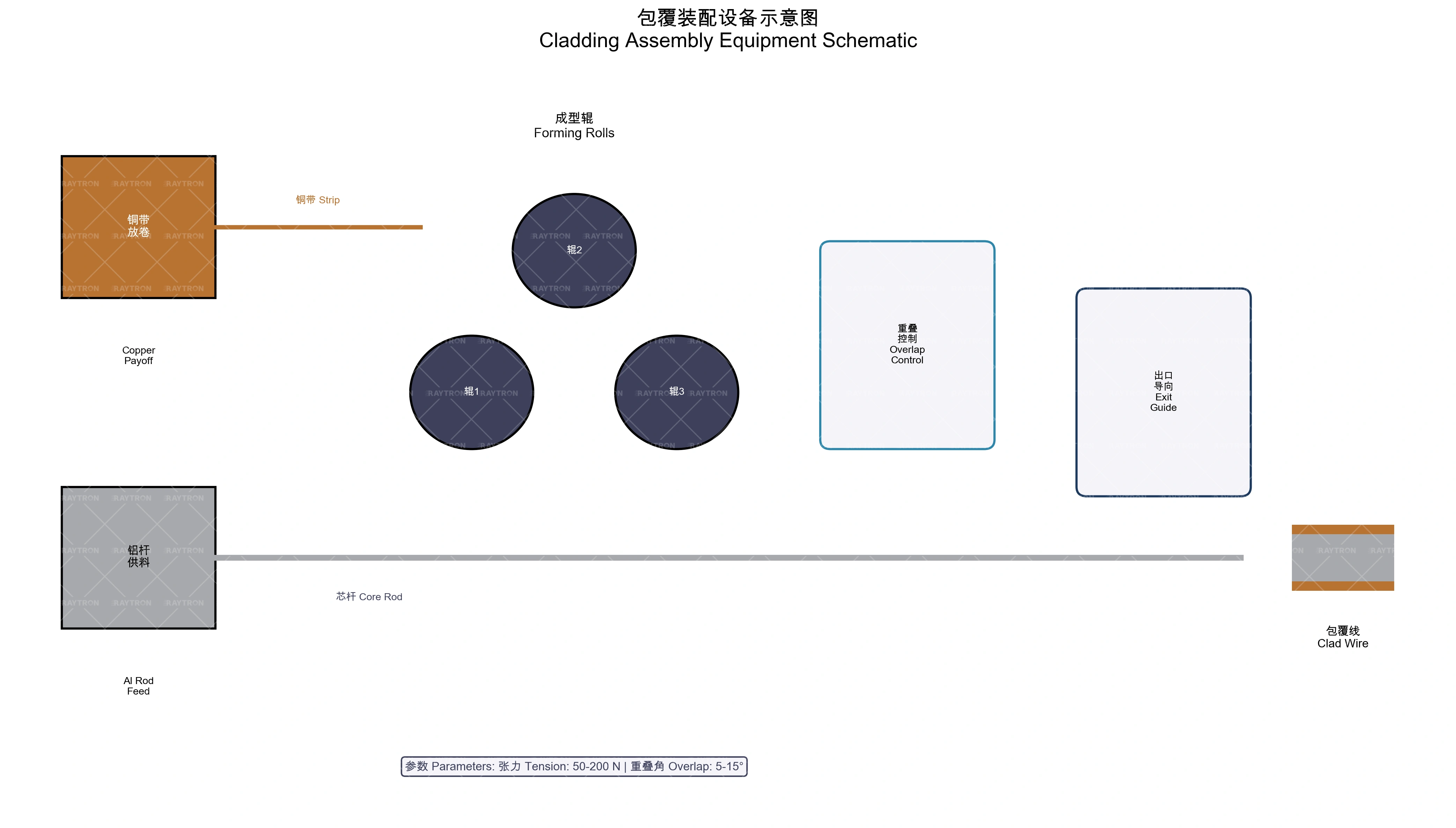
requires 、 and Surface。
Copper Strip Cladding Aluminum Rod Cross-SectionSchematic Diagram
Fig. 2 Copper Strip Cladding Aluminum Rod Cross-Section Diagram

3. WeldingProcess

3.1 WeldingParameter

Weldingtemperature 、pressure and speed Impactquality KeyParameter。
WeldingStrengthImpact Curve
Fig. 3 Effect of Welding Temperature on Bond Strength Curve

3.2 Welding

Main or Welding。

4. DrawingProcess

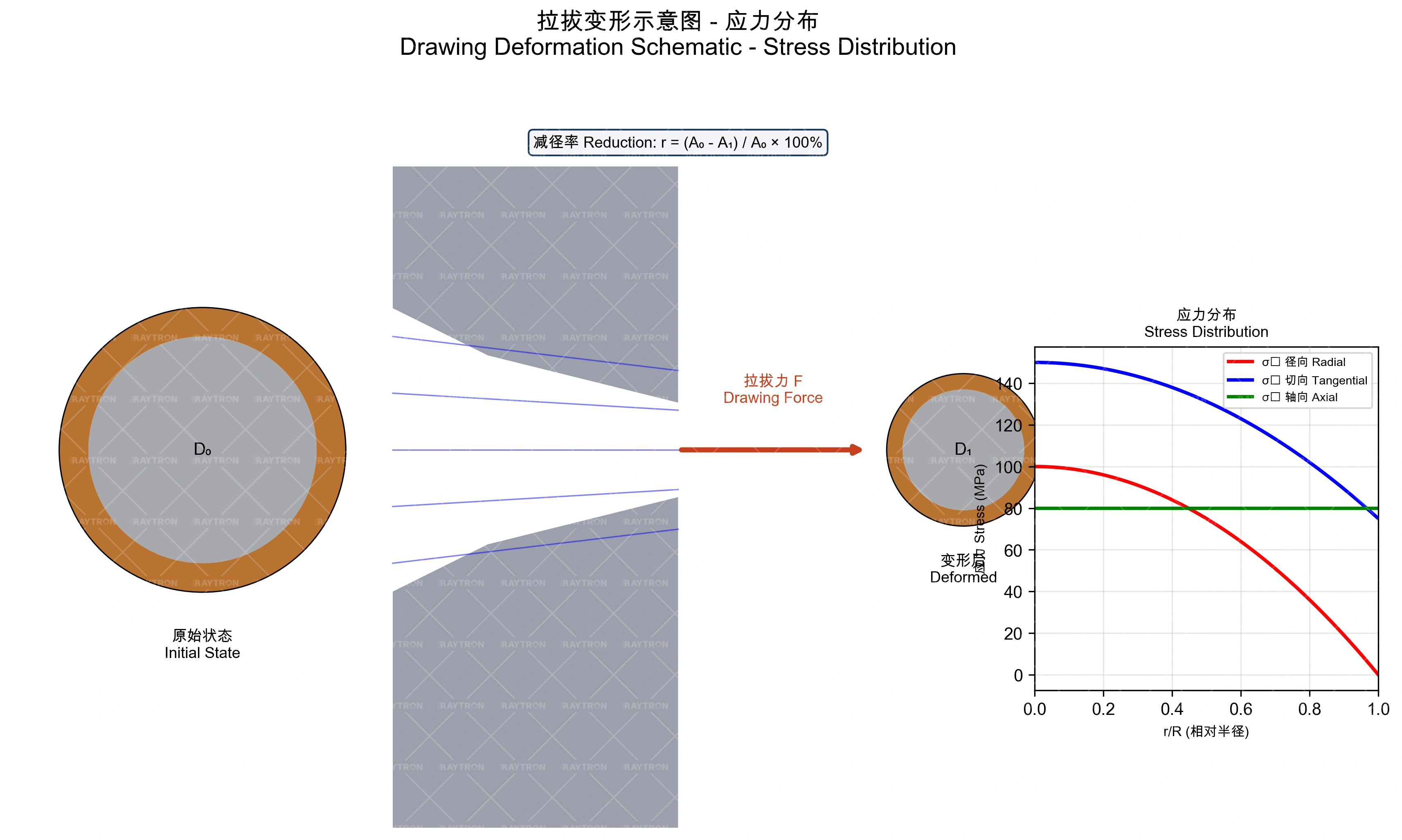
4.1 DrawingPass Design
DrawingPass DesignSchematic Diagram
Fig. 4 DrawingPass DesignSchematic Diagram

4.2 Work HardeningControl

requires through AnnealingControlWork Hardening。

5. Interface
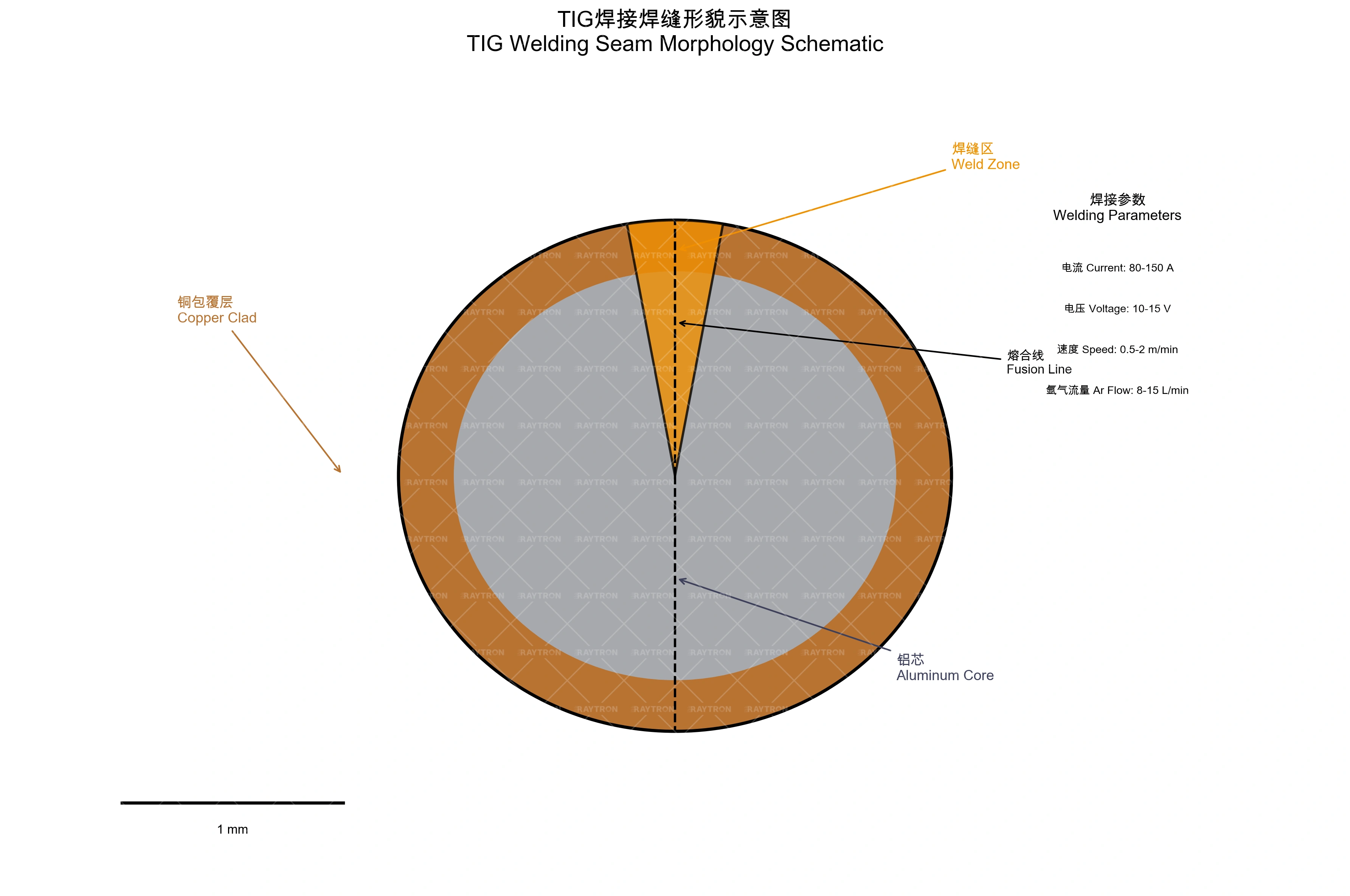
InterfaceSchematic Diagram
Fig. 5 InterfaceformationprocessSchematic Diagram

Interfaceincluding :、Diffusion、、stable。

6. ProcessOptimization

through ExperimentDesign(DOE)methodsOptimizationProcessParameter。

7.
CommonDefectSEMPhoto
Fig. 6 CommonDefectSEMPhoto

8. Conclusion

CladdingSoldering ProcessConductorProduction technology ,through OptimizationProcessParametercan quality 。

Frequently Asked Questions

What is the fundamental difference between clad welding and electroplating?

Clad welding produces metallurgical bonding with bond strength >150MPa, layer thickness 20-200μm, and excellent high-temperature performance. Electroplating is mechanical adhesion with bond strength <50MPa, layer thickness typically <10μm, and easy delamination under thermal cycling. Clad welding products have permanent bonding.

What are the main steps of clad welding process?

Main steps include: 1) Material preparation (cleaning copper strip and core); 2) Copper strip wrapping and forming; 3) Longitudinal seam welding; 4) Multi-pass drawing; 5) Intermediate annealing; 6) Final dimension drawing; 7) Quality inspection. Each step requires precise parameter control.

How to avoid common defects in clad welding?

Delamination: increase welding temperature and pressure; Cracking: add intermediate annealing, control work hardening; Eccentricity: adjust cladding alignment, ensure uniform copper wrapping; Interface defects: control atmosphere, prevent oxidation. Regular equipment maintenance and raw material inspection.

Figures

Create clad welding process flow diagram

Fig. 1 Clad Welding Process Flow Diagram

Copper Strip Cladding Aluminum Rod Cross-Section Diagram

Fig. 2 Copper Strip Cladding Aluminum Rod Cross-Section Diagram

Create Welding Temperature on Bonding Strength Impact Curve

Fig. 3 Welding Temperature on Bonding Strength Impact Curve

Drawing Pass Design Diagram

Fig. 4 Drawing Pass Design Diagram

InterfaceFormation ProcessDiagram

Fig. 5 InterfaceFormation ProcessDiagram

Common DefectsSEMPhoto

Fig. 6 Common DefectsSEMPhoto

Tables

Table 1 Process ParametersScope
ParameterCCACCSNCC
Welding Temperature (°C)300-400400-500350-450
Welding Speed (m/min)5-203-155-15
DrawingReducedDiameterRate (%)15-2510-2015-22
Table 2 OriginalMaterial Requirements
MaterialPuritySurface RequirementsDimensional Tolerance
Copper Strip≥99.9%No Oxidation、No±0.02 mm
Aluminum Rod≥99.5%Cleaning、Dry±0.1 mm
SteelLowCarbonSteelRust Cleaning±0.1 mm
Table 3 Welding Parameters Optimization
ParameterLowValueMostExcellentHighValue
Temperature (°C)280350420
Compressive Force (MPa)150250350
Speed (m/min)51220
Table 4 Drawing PassDesign
PassInlet Diameter (mm)Outlet Diameter (mm)ReducedDiameterRate (%)
110.08.528
28.57.228
37.26.128
46.15.227
Table 5 Common Defects and Solution
DefectsReasonSolution
DelaminationBondingNon-GoodImproveHigh Welding Temperature
CrackExcessDegree Processing HardeningIncrease Annealing
CladdingNon-uniformon in

References

  1. ASTM International ASTM B566-04: Standard Specification for Copper-Clad Aluminum Wire ASTM (2020)
  2. ASM International Welding Handbook ASM International (2021)
  3. Raytron Technical Report Clad Welding Process Optimization Internal Report TR-2025-032 (2025)
XU

Gaolei Xu

Senior Materials Scientist

Credentials & Honors

  • CTO, Raytron Group
  • Zhejiang Provincial High-level Talent Special Support Program - Young Talent
  • Shaoxing "Technology Vice President"
  • Shaoxing Science and Technology Commissioner
  • Member of National Technical Committee 243 on Heavy Metals (SAC/TC 243/SC2)

National Standards (Lead Author) View Official

Patents (Inventor) Search Patents

  • CN104959396A - Production Process of Copper Strip for Composite Contact Materials
  • CN106077125A - Production Process of Copper Profile for Magnetic Pole Coils
  • CN201410710206 - Conductive Material for High-speed Railway Traction Motors and Production Method
  • CN201310719717 - Method for Controlling Strip Shape of Copper Strip Blank by Continuous Extrusion
  • CN201310720126 - Device for Controlling Strip Shape of Copper Strip Blank by Continuous Extrusion
  • CN201310376884 - Five-in-one Copper Strip Edge Treatment Equipment for Transformers
  • CN201420184755 - Continuous Extrusion Die Flow Promotion Device
  • CN201320761640 - Continuous Extrusion Waste Cleaning Device

Areas of Expertise

Copper-Clad Aluminum (CCA) Technology Copper-Clad Steel (CCS) Manufacturing Bimetallic Composite Materials PV Ribbon for Solar Cells Battery Tab Materials for EV Applications Continuous Extrusion Technology

Selected Publications

  • Research and Application of Rolling Method for Manufacturing Metal Laminated Composites, Aluminum Processing Journal, 2008
  • Annealing Process Research of Copper-Aluminum Composite Strip
  • Research on Preparation Process of Copper/Aluminum Composite Strip for Cables
  • Interface Microstructure Evolution of Rolled Copper/Aluminum Composite Strip During Annealing

Mr. Xu Gaolei is a distinguished expert in non-ferrous metal processing with over 15 years of experience. He is recognized as a Young Talent under the Zhejiang Provincial High-level Talent Special Support Program. He leads R&D initiatives in bimetallic composite technologies and has contributed significantly to the standardization of copper and bimetallic materials in China.

Click standard/patent codes to view official documents

Contact Raytron Now - Let Every Meter of Material Create Higher Value for You

Our technical team is the author of multiple Chinese national standards, with 30 years of industry experience and 34 patents, delivering professional bimetallic composite material solutions. Contact us for technical support and product quotes.

Contact Raytron Now - Let Every Meter of Material Create Higher Value for You

Our technical team is the author of multiple Chinese national standards, with 30 years of industry experience and 34 patents, delivering professional bimetallic composite material solutions. Contact us for technical support and product quotes.

Request Quote Chat on WhatsApp