RAYTRON Logo

Clad & Weld Process

Our proprietary Clad & Weld process creates metallurgically bonded bimetallic materials with superior performance characteristics.

Validation Capability

From Process Capability to Procurement Evidence

Raytron connects material selection, process control and inspection items to procurement specifications so engineering, quality and sourcing teams can align before RFQ.

Stage Key Checks Evidence Buyers Should Request
Material and surface preparation
  • Base material grade and clad layer ratio
  • Surface cleanliness, oxide and oil control
  • Incoming dimensions, tolerance and lot traceability
  • Incoming inspection record
  • Material grade or composition document
  • Lot traceability number
Cladding and heat treatment
  • Cladding pressure, diffusion temperature and time window
  • Interface continuity and layer uniformity
  • Interface condition after bending, drawing or peel tests
  • Process control record
  • Cross-section micrograph
  • Bond strength or peel test report
Final release
  • Conductivity, resistance, dimensions and surface condition
  • Customer-specific bending, welding or corrosion validation
  • Packaging, spool and label consistency
  • COA / COC
  • Dimensional and electrical report
  • Sample validation plan

Test Methods & Applicability

Clad & Weld Evidence Modules

The following test items can be provided per product form, purchase specification and customer agreement. Unpublished data is available upon NDA / request. No fabricated data.

Metallographic Cross-Section

Applicable Product
CCA, CCS, NCC clad conductors
Test Method
Cross-section preparation and microscopic examination of clad layer continuity and interface
Equipment
Available upon NDA / request
Sampling Frequency
Per product control plan or qualification plan
Typical Result
Available upon NDA / request
Acceptance Criterion
Continuous clad layer, no visible interface defects
Reference Standard
ASTM B748 / ISO 1463
Limitations
Sample represents a specific cross-section, not full-length evaluation

EDS Line Scan

Applicable Product
CCA, CCS, NCC clad conductors
Test Method
Energy dispersive spectroscopy line scan across bond interface
Equipment
Available upon NDA / request
Sampling Frequency
Per qualification plan
Typical Result
Available upon NDA / request
Acceptance Criterion
Composition transition consistent with clad & weld process
Reference Standard
ISO 22309
Limitations
Semi-quantitative; requires calibration against reference samples

Layer Thickness Distribution

Applicable Product
CCA, CCS, NCC wire and strip
Test Method
Multi-point measurement of clad layer thickness uniformity on cross-section
Equipment
Available upon NDA / request
Sampling Frequency
Per product control plan
Typical Result
Available upon NDA / request
Acceptance Criterion
Per product specification and customer agreement
Reference Standard
ASTM B748 / ISO 1463
Limitations
Thickness may vary around circumference; reported as statistical range

Peel / Shear Test

Applicable Product
CCA, CCS, NCC clad conductors
Test Method
Peel or shear test of clad bond interface
Equipment
Available upon NDA / request
Sampling Frequency
Per product control plan or qualification
Typical Result
Available upon NDA / request
Acceptance Criterion
Per product specification and customer agreement
Reference Standard
Per product specification and customer agreement
Limitations
Test method and specimen geometry must be agreed

Bending Test

Applicable Product
CCA, CCS, NCC wire and strip
Test Method
Repeated bending or wrap test to assess interface integrity
Equipment
Available upon NDA / request
Sampling Frequency
Per product control plan
Typical Result
Available upon NDA / request
Acceptance Criterion
No delamination or cracking at interface
Reference Standard
ISO 7801 (where applicable)
Limitations
Bend radius and cycle count must match application condition

Thermal Cycling

Applicable Product
CCA, CCS, NCC clad conductors
Test Method
Thermal cycling across specified temperature range
Equipment
Available upon NDA / request
Sampling Frequency
Per qualification plan
Typical Result
Available upon NDA / request
Acceptance Criterion
No delamination, cracking, or resistance increase beyond limit
Reference Standard
IEC 60068-2-14
Limitations
Test profile must be agreed based on application environment

Electrical Resistivity Test

Applicable Product
CCA, CCS, NCC clad conductors
Test Method
DC resistance or conductivity measurement
Equipment
Available upon NDA / request
Sampling Frequency
Per product control plan
Typical Result
Available upon NDA / request
Acceptance Criterion
Per product specification (e.g., CCA 62–70% IACS)
Reference Standard
ASTM B193
Limitations
Measurement temperature and method must be specified

Inspection Report Sample

Applicable Product
All clad & weld products
Test Method
Combined inspection report per order
Equipment
N/A
Sampling Frequency
Per shipment or lot
Typical Result
Available upon NDA / request
Acceptance Criterion
Per purchase specification
Reference Standard
Per customer agreement
Limitations
Report content and format customizable; samples require NDA

Key Process Characteristics

Solid-State Bonding

  • • No melting of base metals during the bonding process
  • • Preserves the original properties of both metals
  • • Creates a true metallurgical bond at the interface

Bond Integrity

  • • Bond integrity verified per product control plan
  • • Solid-state cladding, not electroplated
  • • Interface inspected per applicable inspection method

Material Combinations

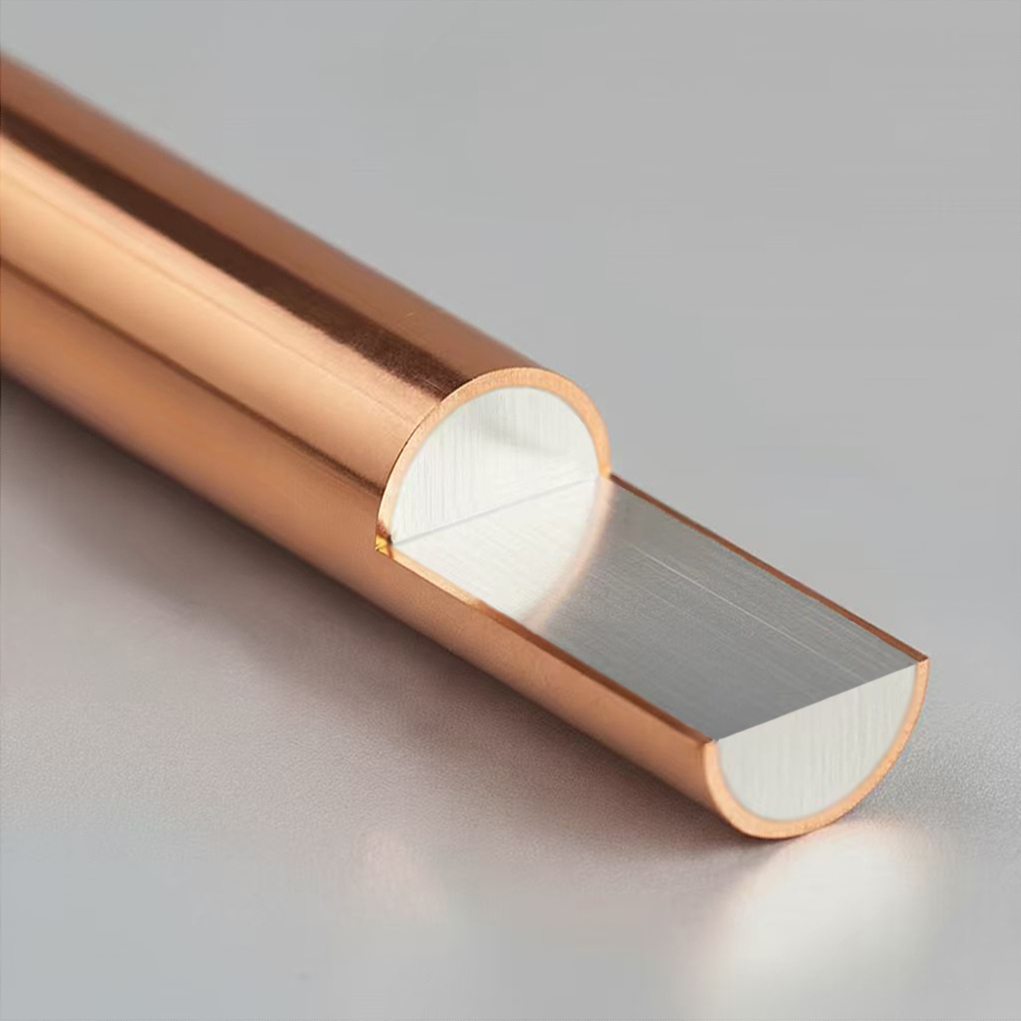
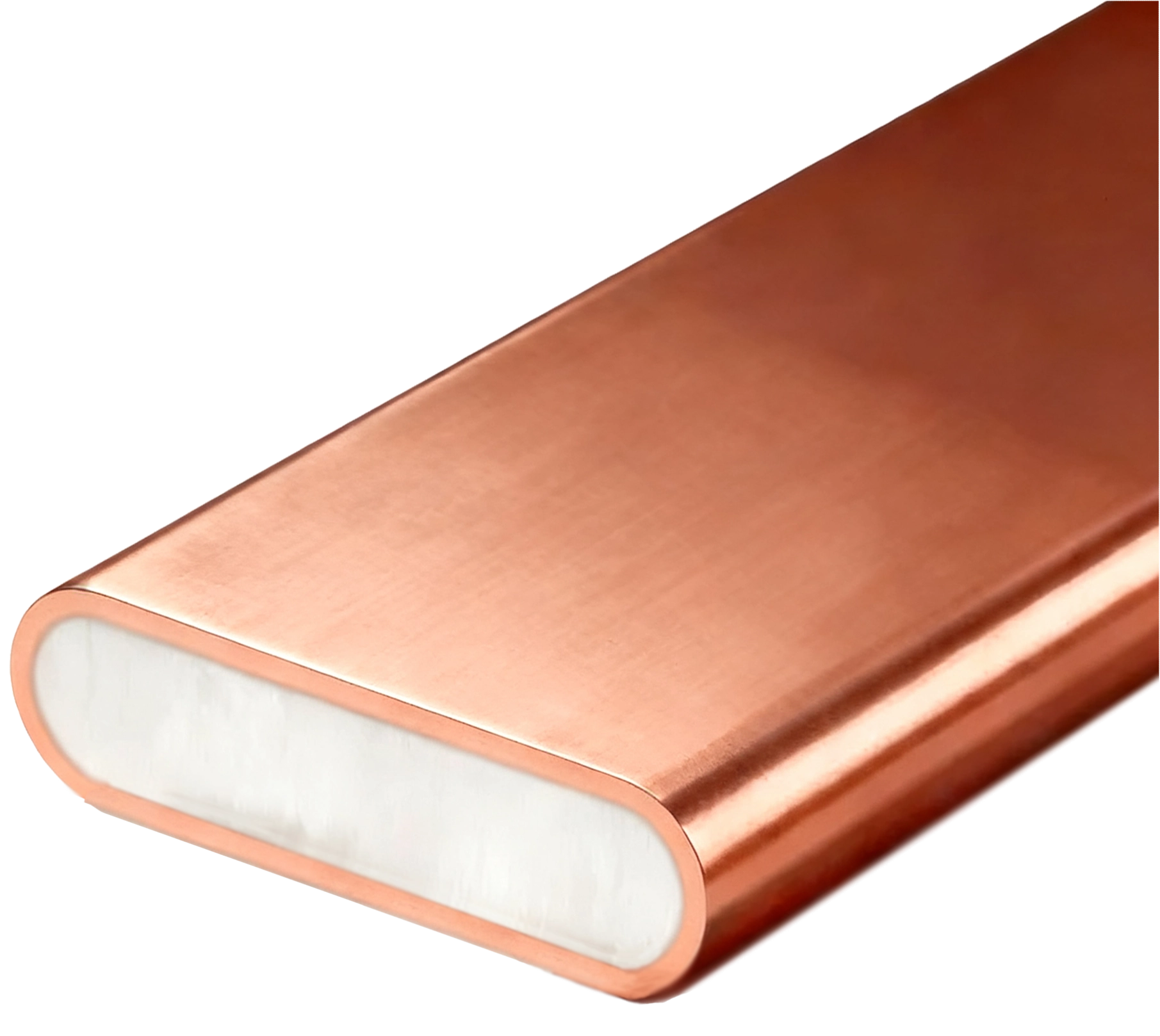
Copper Clad Aluminum (CCA)

Copper cladding ratio: 60%-90%

Lightweight, excellent conductivity

Copper Clad Steel (CCS)

Copper cladding ratio: 10%-40%

High strength for demanding applications

Nickel Clad Copper (NCC)

Various nickel ratios available

Corrosion resistance for harsh environments

Silver Clad Copper (SCC)

High-conductivity applications

Premium performance for precision applications

Process Declaration

All our bimetallic products are manufactured using the Clad & Weld process with metallurgical bonding, not electroplated. Bond integrity is verified per the product control plan.

Bond Integrity (per control plan)
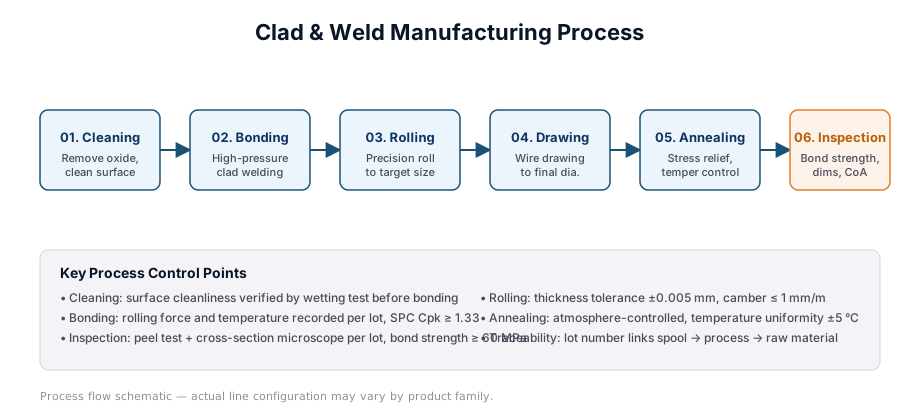
Process Visualization

Clad & Weld Process Flow Diagram
Schematic Diagram
01. Cleaning

Removes oxides and impurities from raw material surfaces to ensure a clean bonding interface.

02. Bonding

Physically presses two metals together under high pressure to form an initial mechanical bond.

03. Diffusion

High-temperature annealing causes atoms to diffuse across the interface, forming a metallurgical bond.

Key Technical Parameters

Parameter Range Note
Diffusion Temp 800°C - 1000°C Depends on material combo
Bonding Pressure > 100 MPa Ensures gap-free contact
Thickness Tolerance ± 0.005 mm High precision control

FAQ

How does Clad & Weld differ from Electroplating?
Electroplating is a surface deposition process. Clad & Weld uses pressure, heat and diffusion control to form a bonded interface. Reliability should be confirmed by cross-section, peel or bond-strength testing.
Does this process affect conductivity?
The process is designed to maintain a stable conductive path, but conductivity and contact resistance should be confirmed by product form, layer ratio and customer test method.

Products Utilizing This Technology

Copper Clad Aluminum Round Wire - 65% IACS conductivity, Copper Clad Aluminum (Cu/Al), for Cable & Conductor and Industrial Motors

Copper Clad Aluminum Round Wire

Copper Clad Aluminum (Cu/Al)

Conductivity: 65% IACS
View Details
Copper Clad Aluminum Flat Wire - 65% IACS conductivity, Copper Clad Aluminum (Cu/Al), for Industrial Motors and Photovoltaic Solar

Copper Clad Aluminum Flat Wire

Copper Clad Aluminum (Cu/Al)

Conductivity: 65% IACS
View Details
Copper Clad Aluminum Strip - 65% IACS conductivity, Copper Clad Aluminum (Cu/Al), for Battery & Energy Storage and Electronics Connectors

Copper Clad Aluminum Strip

Copper Clad Aluminum (Cu/Al)

Conductivity: 65% IACS
View Details

Contact Raytron Now - Let Every Meter of Material Create Higher Value for You

Raytron focuses on copper-aluminum composite PV ribbon and busbar ribbon, plus CCA, CCS and NCC clad conductors with custom specifications, sample support and production quotations.

13
Precision Rolling Lines

Rolling, slitting and dimensional control

15,000
Tons Annual Capacity

Supports samples, pilot lots and ongoing supply

28
Patents

Clad conductor, rolling and related processes

200 kg
MOQ

Suitable for engineering samples and trial orders

24h
RFQ Reply Within

Initial acknowledgement within 24 business hours.

ISO9001
Certified

Quality system and lot traceability support

RFQ Request Quote Response within 24 business hours WhatsApp
Request Quote WhatsApp