
Evaluating CCA for Automotive Harnesses
Plan the harness material trial
Scroll horizontally to read all columns. Keep the conditions and units with each value.
| Stage | What to compare |
|---|---|
| Candidate wire | Required resistance, diameter or section, insulation and routing envelope |
| Terminal setup | Accepted material combination, preparation, tooling and connection geometry |
| Harness duty | Voltage drop, local heating, bundling, supports and environmental loads |
| Production and service | Material identification, traceability, process control and repair specification |
Use the same circuit duty and acceptance requirements for the copper reference and CCA candidate. Report conductor, harness and complete-vehicle mass separately; the material comparison is not a measured whole-vehicle result.
Engineering Evaluation Scenario
Illustrative engineering evaluation. Define the design requirements and test plan before selecting a construction.
Application
Low-power signal and body-electronics harness circuits
Engineering Question
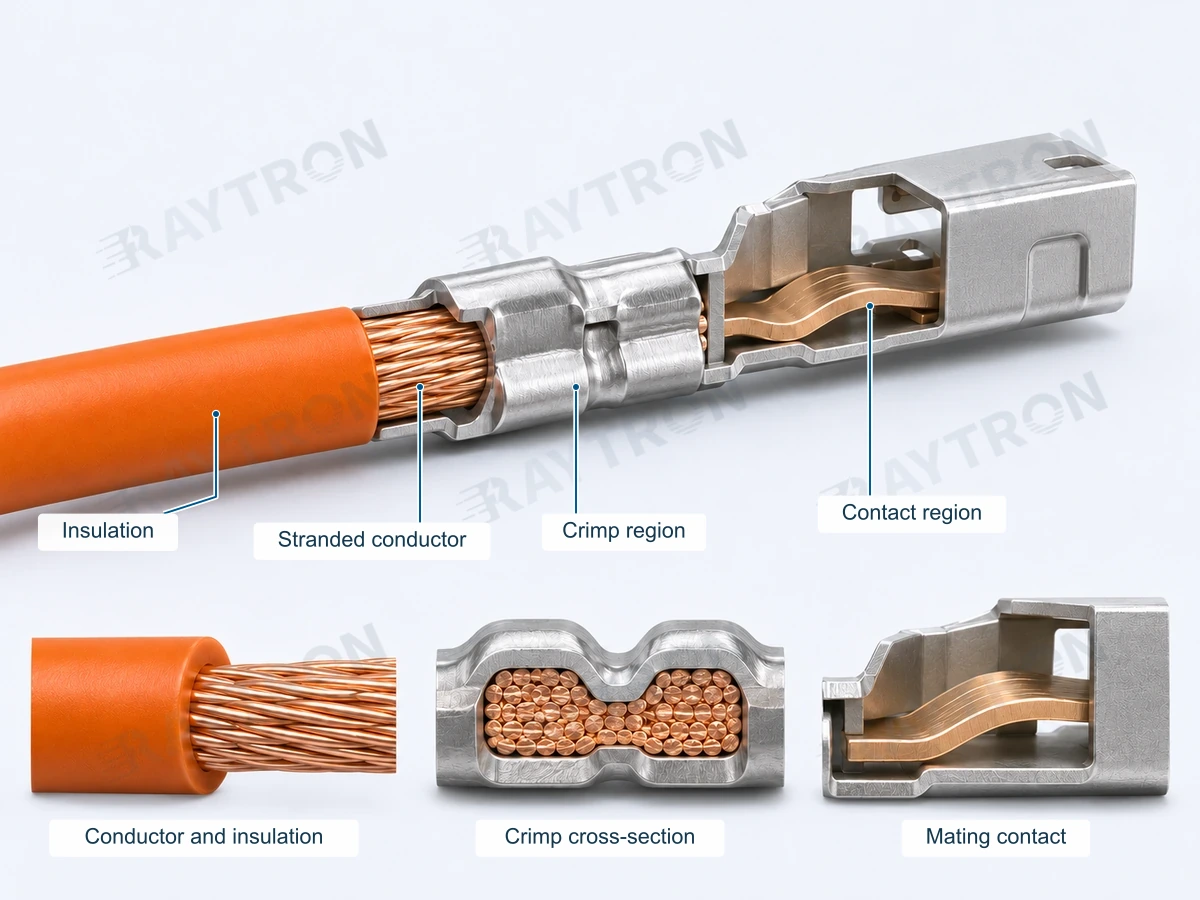
Select the circuits to assess, then compare conductor resistance, installed mass and the terminal process. Record crimp performance, temperature rise, pull force and durability results before considering a production change.
Candidate Material Options
Copper wire (baseline reference)
CCA wire with agreed copper volume ratio
High-strength alloy conductor (where mechanical load dominates)
Key Risks
-
Crimp terminals and tooling originally dimensioned for copper require re-validation for the CCA composite cross-section.
-
Ampacity and voltage drop must be re-checked; CCA is not a same-cross-section drop-in replacement for copper.
-
Termination points need review for galvanic pairing and long-term contact stability.
-
Circuit selection matters: safety-critical and high-current circuits require separate qualification.
Recommended Validation Route
Define target circuits, currents, temperatures and applicable vehicle validation standard.
Agree conductor geometry and copper volume ratio with the supplier.
Validate crimp pull-force and cross-section on production tooling.
Run agreed environmental and electrical testing (thermal cycling, vibration, resistance) per the purchase specification.
Buyer performs vehicle-level approval before any production release.
Information Required from Buyer
- • Circuit list with function class (signal, low-power, safety-relevant)
- • Current, voltage and ambient temperature per circuit
- • Terminal and connector part numbers used today
- • Applicable vehicle validation standard and test items
- • Annual volume and target timeline
Conditions Where the Material Is Not Recommended
-
Safety-critical circuits without a dedicated qualification program.
-
Applications outside the validated temperature and current envelope.
-
Termination designs that cannot be re-validated for the composite conductor.
Raytron Support Scope
Raytron can provide material construction data, samples, joint review of crimp parameters, and batch documentation per the agreed purchase specification.
Discuss this application
Send the drawing, application and target specification so Raytron can help review material routes, validation priorities and RFQ fields.