
Engineering FAQ Guide
CCA Flat Wire: Corners, Bending and Insulation FAQ
What makes flat CCA different from round CCA?
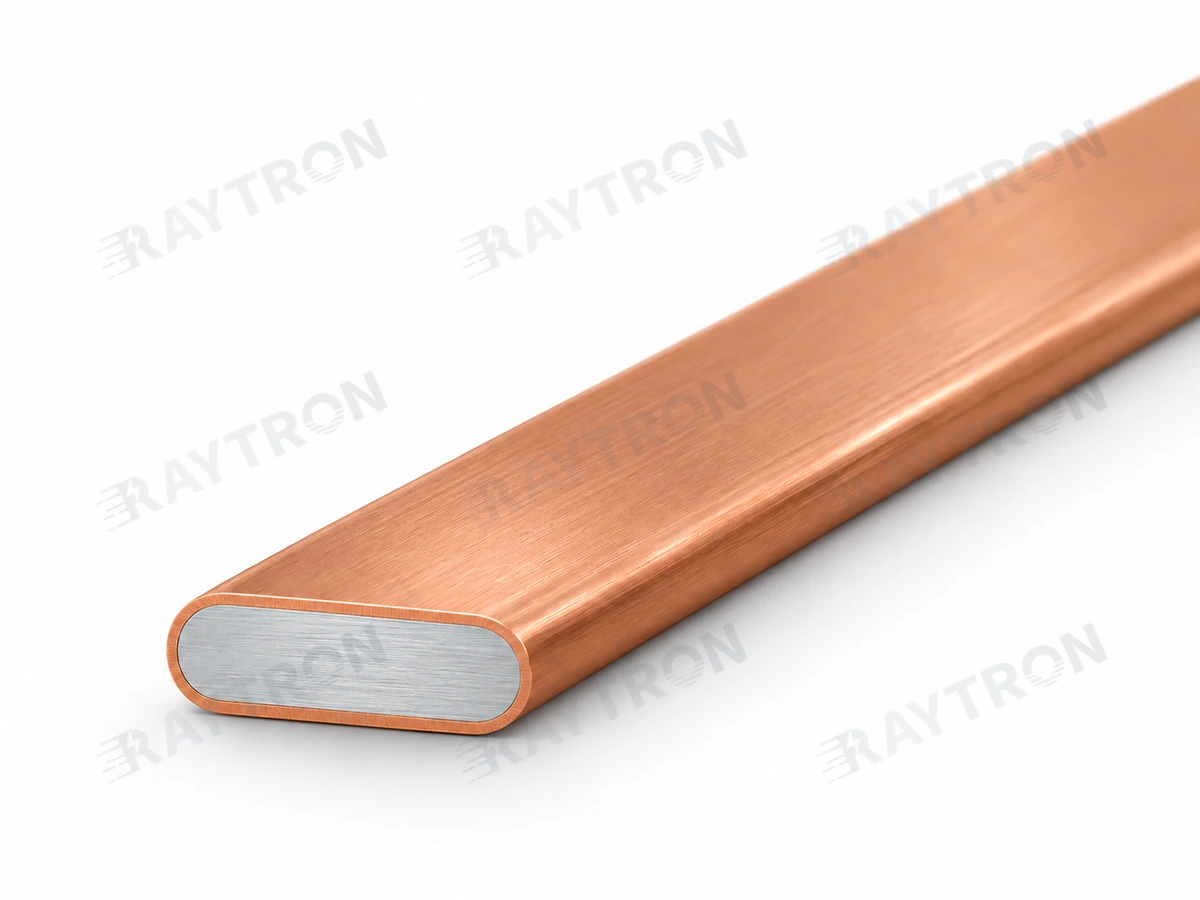
Flat CCA has width, thickness and corner geometry as well as a clad material structure. Its bending direction, bare metallic area and insulated envelope must suit the part or winding; a round-wire diameter cannot describe those requirements.
CCA flat wire combines a copper-clad aluminum conductor with a flat cross-section. Specify width, thickness, corner radius and resistance, then add the bend direction, bend radius and insulation requirements for the intended winding or formed part.
Primary Applications
- voice coil evaluation
- inverter magnetic components
- motor windings
- lightweight conductive parts
Critical RFQ Specifications
- width
- thickness
- corner radius
- copper ratio
- conductivity
- edge condition
Selection
How is the actual metallic section and resistance specified for this form?
Use width, thickness, corner or usable-width geometry and the individual metal layers, with the ratio basis identified. Record actual metallic area and measured or specified resistance at the stated temperature and length. Equal area or a nominal copper diameter does not establish equal resistance, ampacity, fault duty or joining performance.
Specifications
How should the copper fraction be stated?
Identify whether copper content is by mass, volume or cross-sectional area, and specify the measurement or calculation basis. These percentages cannot be exchanged without accounting for the material construction.
Which flat-wire fields are different from round wire?
Give width, thickness, separate tolerances, corner radius, edge condition and long-edge or short-edge bend direction. For insulated wire add finished dimensions and film requirements.
Testing
What is needed to evaluate a connection?
Identify the terminal, conductor dimensions, crimp or joining method, current profile, moisture, temperature and flexing. Check the exposed end or cut surface and test the complete connection. If the drawing requires copper, obtain the specification owner’s approval for a change.