
Engineering FAQ Guide
CCS Narrow Foil: Forming and Connection FAQ
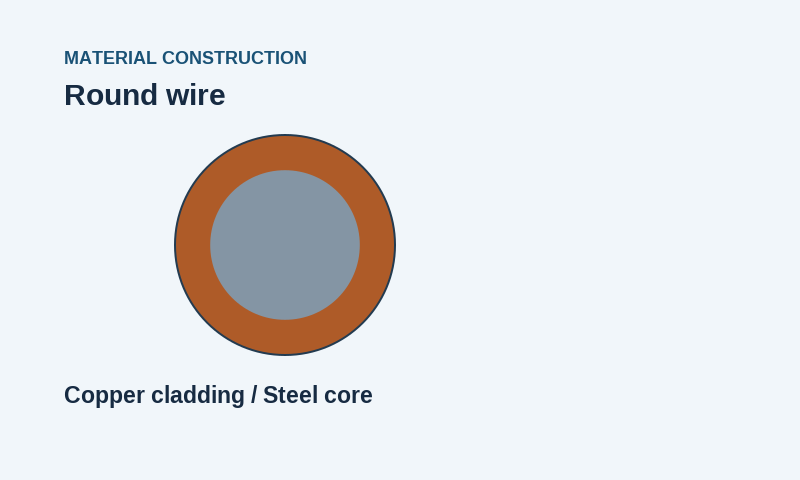
How is CCS narrow foil specified for a formed part?
Specify steel and copper construction, width, thickness, temper and edge condition. The part drawing adds forming direction, bend geometry and springback requirements; inspect exposed cut edges and the copper layer after forming.
Define the strip dimensions, copper-layer requirement and forming or joining process, including how cut edges will be used in the finished part.
Primary Applications
- electronic component leads
- connector terminals
- shaped high-strength conductors
Critical RFQ Specifications
- width
- thickness
- edge condition
- strength target
- surface
- forming requirement
Selection
Which formed-edge and layer checks apply to narrow foil?
Use the actual stamped or bent part: define thickness/width, rolling direction, burr height/direction, copper coverage at cut and bent edges, springback and magnetic/electrical test requirements. Grounding-wire or railway claims do not establish qualification of thin foil.
Specifications
Which electrical and mechanical quantities should be compared?
State material conductivity at a defined temperature separately from finished-conductor resistance. Specify tensile strength or breaking load for the identified specimen, grade and condition; geometry and strand construction affect finished-conductor results.
Testing
How should copper-layer continuity be checked?
Agree cross-section measurements, surface inspection and applicable bend or torsion checks for the form. Inspect cut ends, formed areas and joints against the exposure requirements.
How should stamping and springback be evaluated?
Provide width, thickness, condition, forming direction, bend radius and mating dimensions. Measure springback, burr height and direction, copper coverage and joining-surface condition on the finished part.