
Engineering FAQ Guide
CCS Stranded Wire: Construction and Installation FAQ
What defines a finished CCS strand?
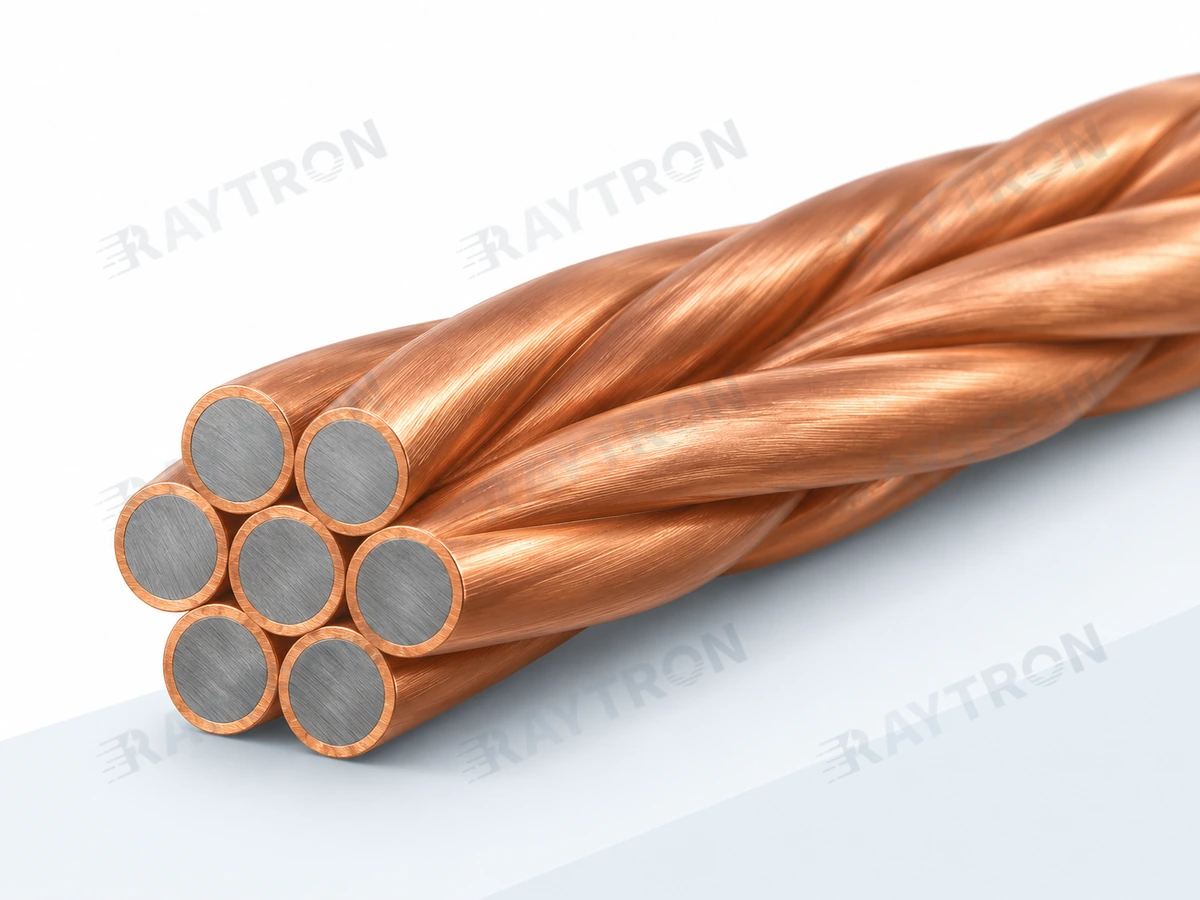
A CCS strand is assembled from individual copper-clad steel wires. Wire diameter, count, lay direction, lay length and finished diameter define the construction; its complete resistance and breaking load describe the finished strand.
Specify the strand construction, resistance and mechanical requirements together with the connection method, bend limits and installation conditions.
Primary Applications
- grounding networks
- telecom grounding
- infrastructure conductors
- cable conductor systems
Critical RFQ Specifications
- strand structure
- lay direction
- tensile strength
- conductivity
- corrosion requirement
- reel packaging
Selection
What inputs are needed for grounding evaluation?
Provide the project-approved material requirements, fault current and duration, installation loads, soil or exposure conditions and connection details. A CCS material name does not determine the grounding conductor size or establish project acceptance.
Specifications
Which electrical and mechanical quantities should be compared?
State material conductivity at a defined temperature separately from finished-conductor resistance. Specify tensile strength or breaking load for the identified specimen, grade and condition; geometry and strand construction affect finished-conductor results.
Which strand dimensions belong in an RFQ?
State individual wire diameter and count, lay length, lay direction, metal area, finished outside diameter and tolerance. Specify complete-conductor resistance and breaking load, compatible connectors, bend limits and reel dimensions.
Testing
How should copper-layer continuity be checked?
Agree cross-section measurements, surface inspection and applicable bend or torsion checks for the form. Inspect cut ends, formed areas and joints against the exposure requirements.