
Engineering FAQ Guide
Nickel-Clad Copper: Surface and Service-Condition FAQ
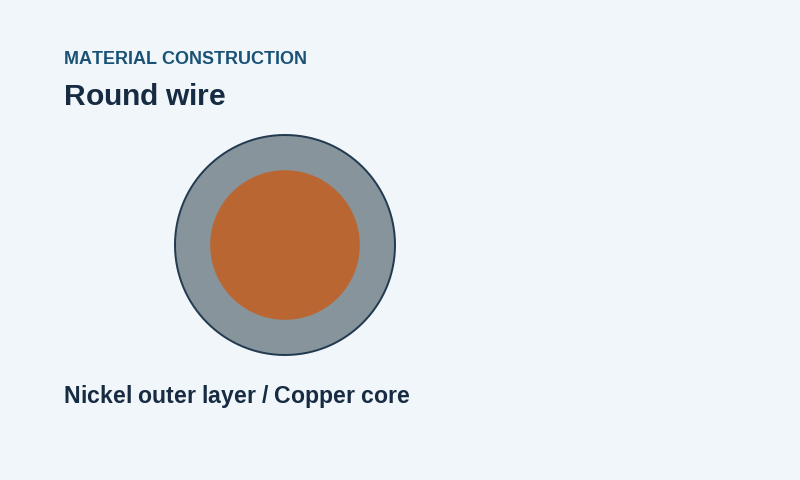
What does the nickel layer do in an NCC conductor?
NCC combines a copper current path with a nickel outer layer. The nickel surface participates in the contact, joining and environmental exposure, while the complete conductor and assembly determine resistance, temperature and durability.
Nickel-clad copper combines a copper core or substrate with a nickel outer layer. Specify the product form, nickel layer, electrical requirement and joining method. For hot or corrosive service, include the exposure conditions and any cut edges or exposed ends.
Primary Applications
- battery tabs
- high-temperature sensors
- chemical process conductors
- hydrogen energy evaluation
Critical RFQ Specifications
- form
- nickel ratio
- temperature target
- corrosion environment
- conductivity
- joining method
Selection
Does a nickel surface establish suitability for every chemical environment?
No. State the medium, concentration, temperature, exposure time and whether cut edges, ends or weld zones expose copper. Evaluate the finished component against those conditions.
Specifications
How should the nickel layer be specified?
State whether the layer is clad or plated, its covered faces, thickness or proportion basis, and the method used to inspect it. Include exposed cut edges and any forming or joining that changes the surface. These fields describe the construction more precisely than the abbreviation NCC.
Testing
What should be checked after joining or forming?
Inspect the nickel coverage, cracks, layer integrity and exposed copper after the actual bend or weld process. Record joint resistance, strength and relevant corrosion or thermal results for the same sample.