
Engineering FAQ Guide
NCC Foil: Layer Quality and Handling FAQ
Which details matter for thin NCC foil?
Define the copper substrate, nickel layers, total thickness, surface and edge requirements. Roll dimensions, winding direction and handling tension also matter because creasing or edge damage can change the condition delivered to the next process.
Specify nickel-clad copper foil by total thickness, nickel-layer requirements, width, surface condition and roll format. Describe the forming, lamination or welding process and the exposure of cut edges so the inspection plan matches the finished part.
Primary Applications
- thin battery connections
- corrosion-resistant conductive layers
- sensor foils
Critical RFQ Specifications
- thickness
- width
- nickel ratio
- surface condition
- roll format
- edge quality
Selection
Does a nickel surface establish suitability for every chemical environment?
No. State the medium, concentration, temperature, exposure time and whether cut edges, ends or weld zones expose copper. Evaluate the finished component against those conditions.
Specifications
How should the nickel layer be specified?
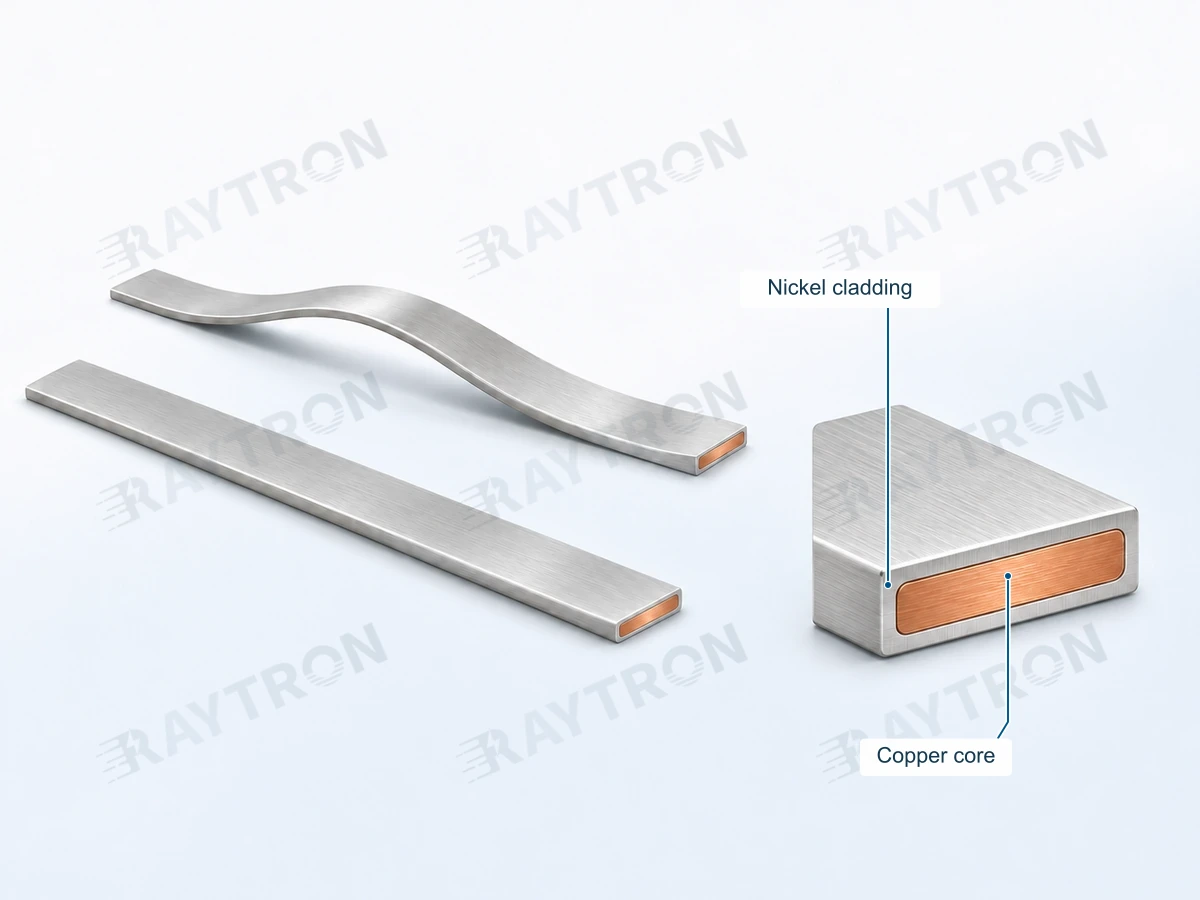
State whether the layer is clad or plated, its covered faces, thickness or proportion basis, and the method used to inspect it. Include exposed cut edges and any forming or joining that changes the surface. These fields describe the construction more precisely than the abbreviation NCC.
Testing
What should be checked after joining or forming?
Inspect the nickel coverage, cracks, layer integrity and exposed copper after the actual bend or weld process. Record joint resistance, strength and relevant corrosion or thermal results for the same sample.
Packaging
What handling details are specific to NCC foil?
Specify total thickness, width, each-face layer coverage, edge quality, roll core, permitted splices and unwinding tension. Check wrinkles, pinholes and layer damage after lamination or winding.