
Engineering FAQ Guide
NCC Round Wire: Temperature, Surface and Joining FAQ
What defines an NCC round-wire application?
Specify the copper core, nickel layer, diameter and temper, then describe the insulation and joint. Use the actual temperature history and exposure to choose the validation; the name NCC is not a temperature or pressure rating.
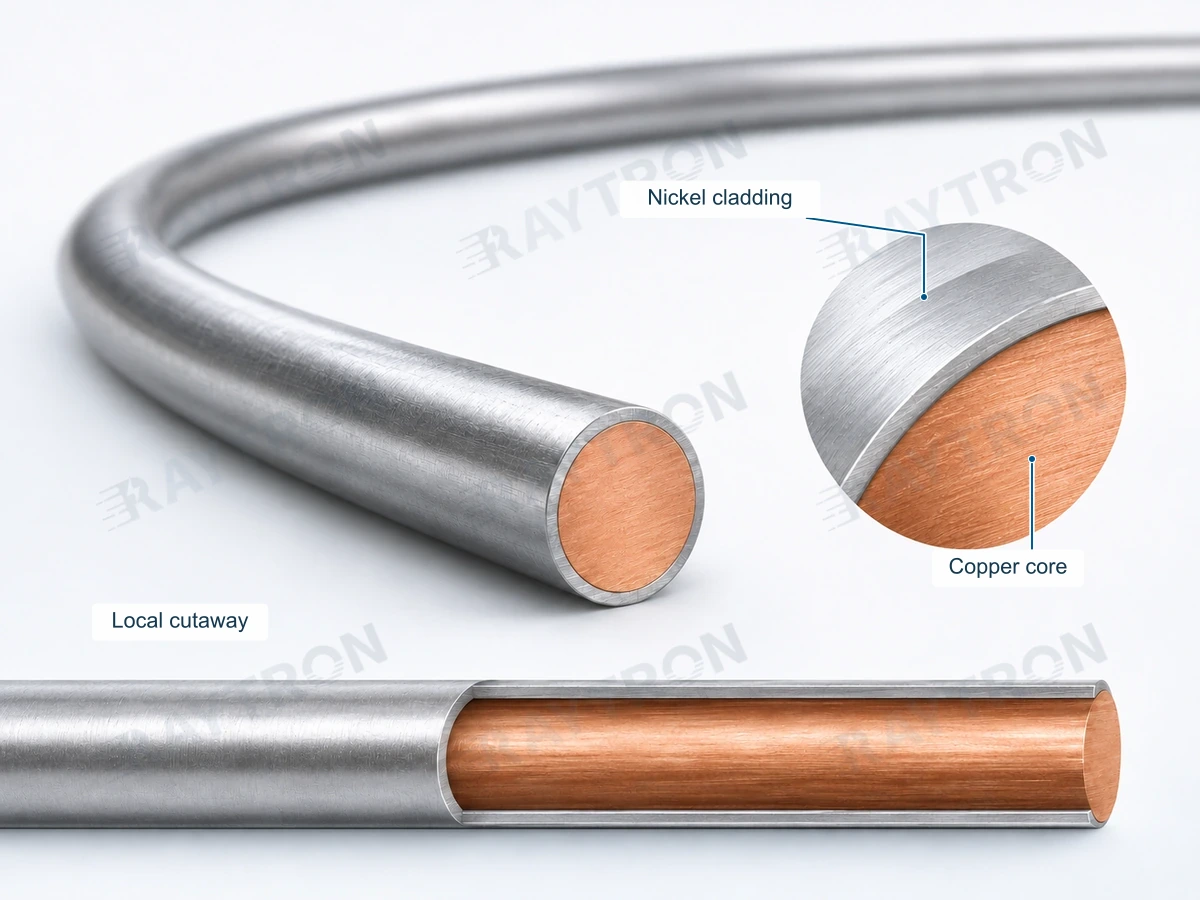
NCC round wire has a copper core with nickel cladding. Specify diameter, nickel-layer requirements and the joining method. For temperature-sensitive service, state the operating profile and exposure conditions, including how the wire ends will be protected.
Primary Applications
- high-temperature sensors
- lighting lead-in wire
- chemical process conductors
- engine compartment wiring
Critical RFQ Specifications
- diameter
- nickel ratio
- temperature target
- corrosion environment
- conductivity
- joining method
Selection
Does a nickel surface establish suitability for every chemical environment?
No. State the medium, concentration, temperature, exposure time and whether cut edges, ends or weld zones expose copper. Evaluate the finished component against those conditions.
Specifications
How should the nickel layer be specified?
State whether the layer is clad or plated, its covered faces, thickness or proportion basis, and the method used to inspect it. Include exposed cut edges and any forming or joining that changes the surface. These fields describe the construction more precisely than the abbreviation NCC.
Testing
What should be checked after joining or forming?
Inspect the nickel coverage, cracks, layer integrity and exposed copper after the actual bend or weld process. Record joint resistance, strength and relevant corrosion or thermal results for the same sample.