
13
Precision Rolling Lines
Rolling, slitting and dimensional control
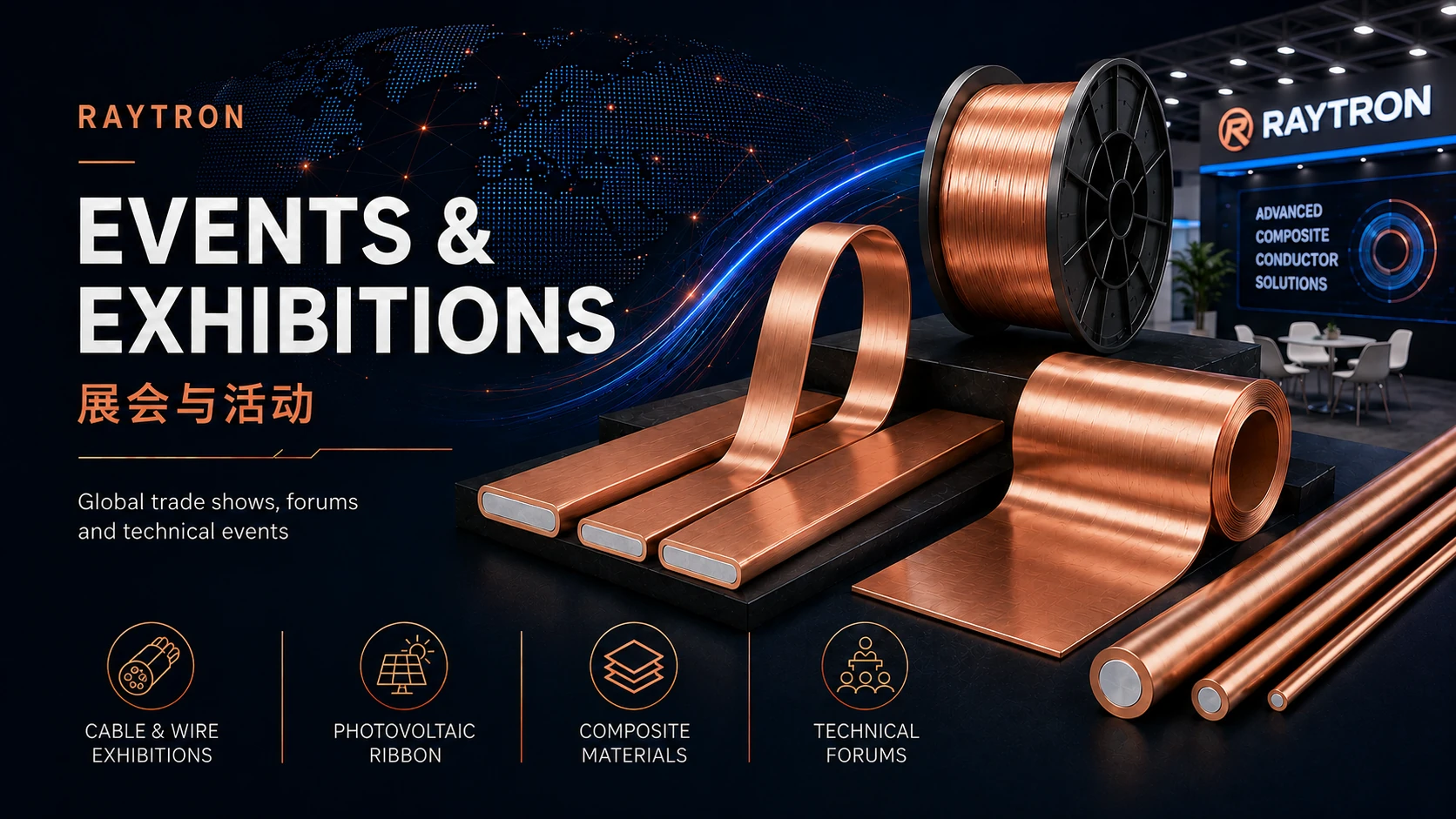
From round wire and flat wire to strip and foil, Raytron discussed how clad architecture, dimensions, joining and service conditions determine whether a conductor can move into production.
Date
April 13-17, 2026
Venue
Düsseldorf Exhibition Centre, Düsseldorf, Germany
Booth
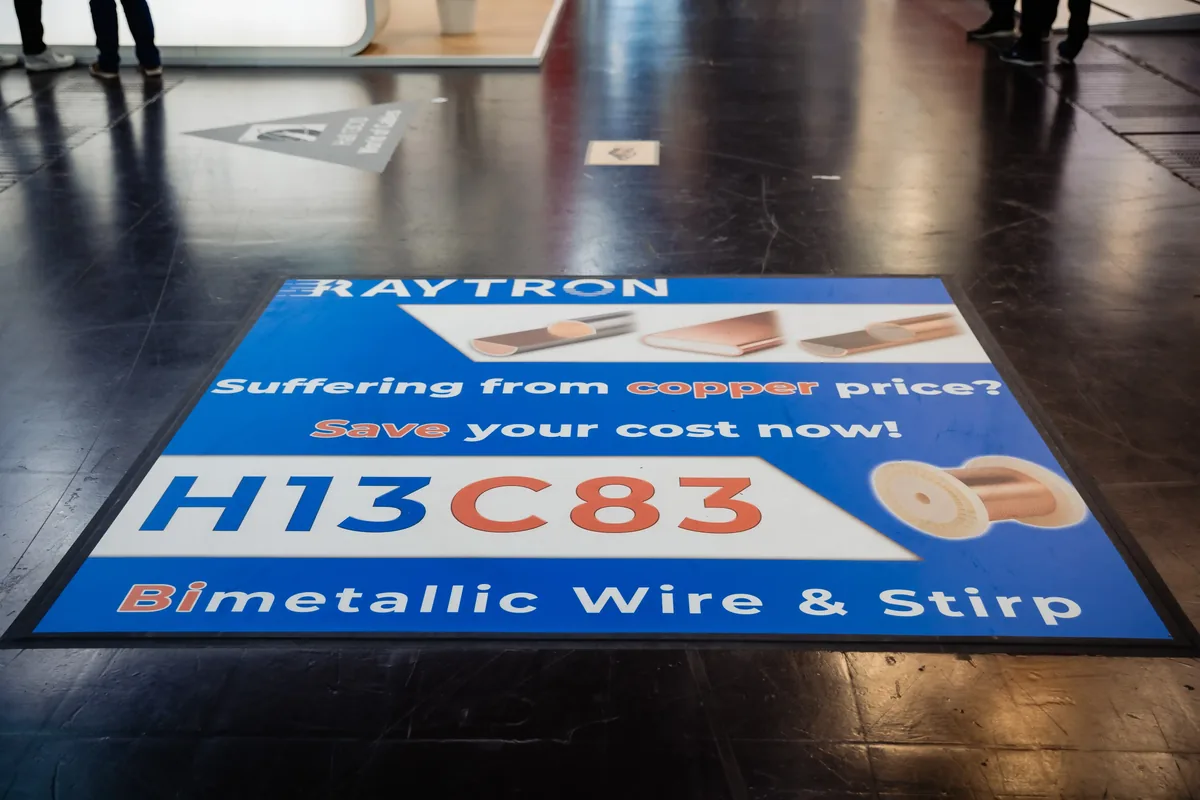
H13C83
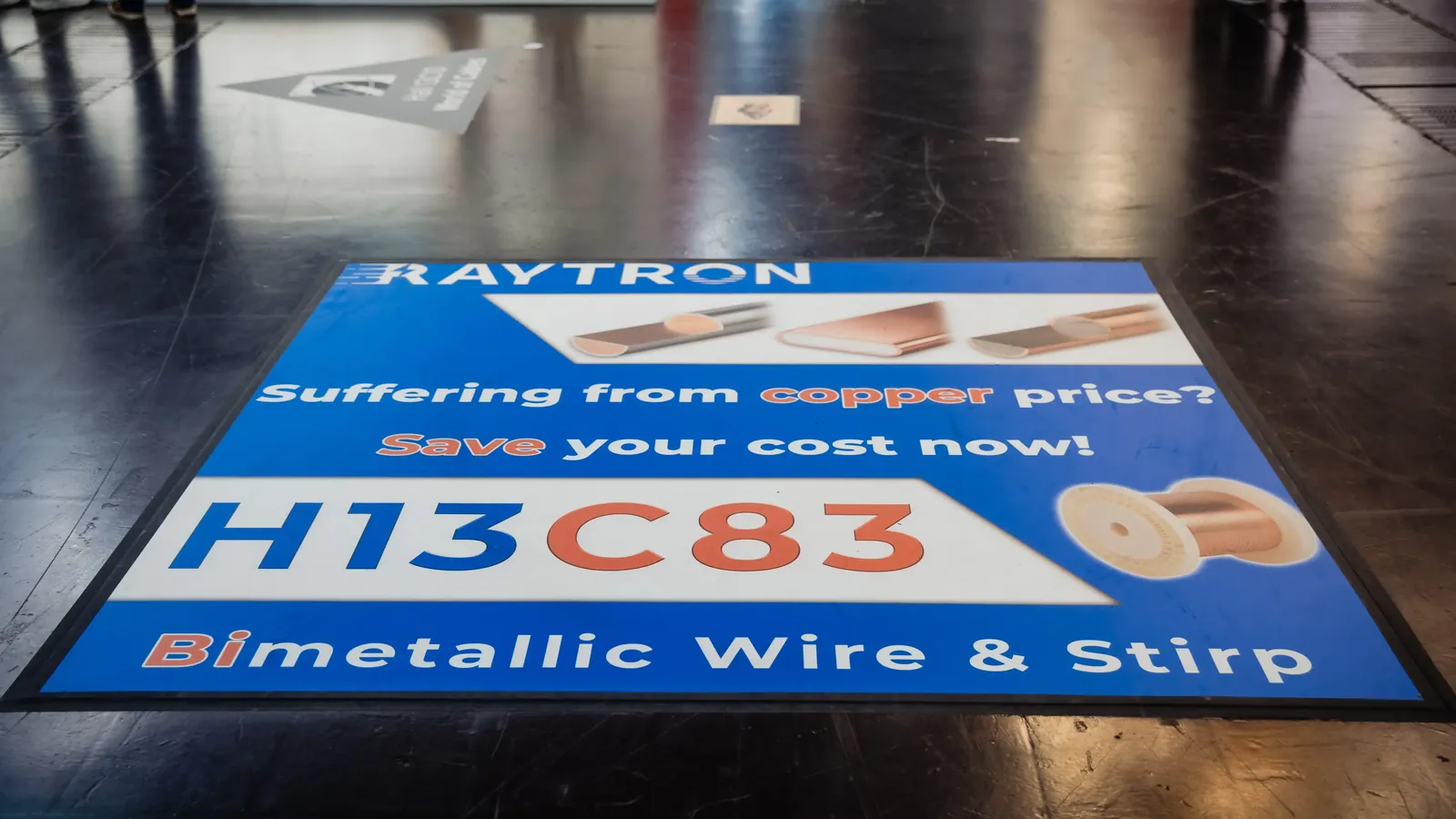
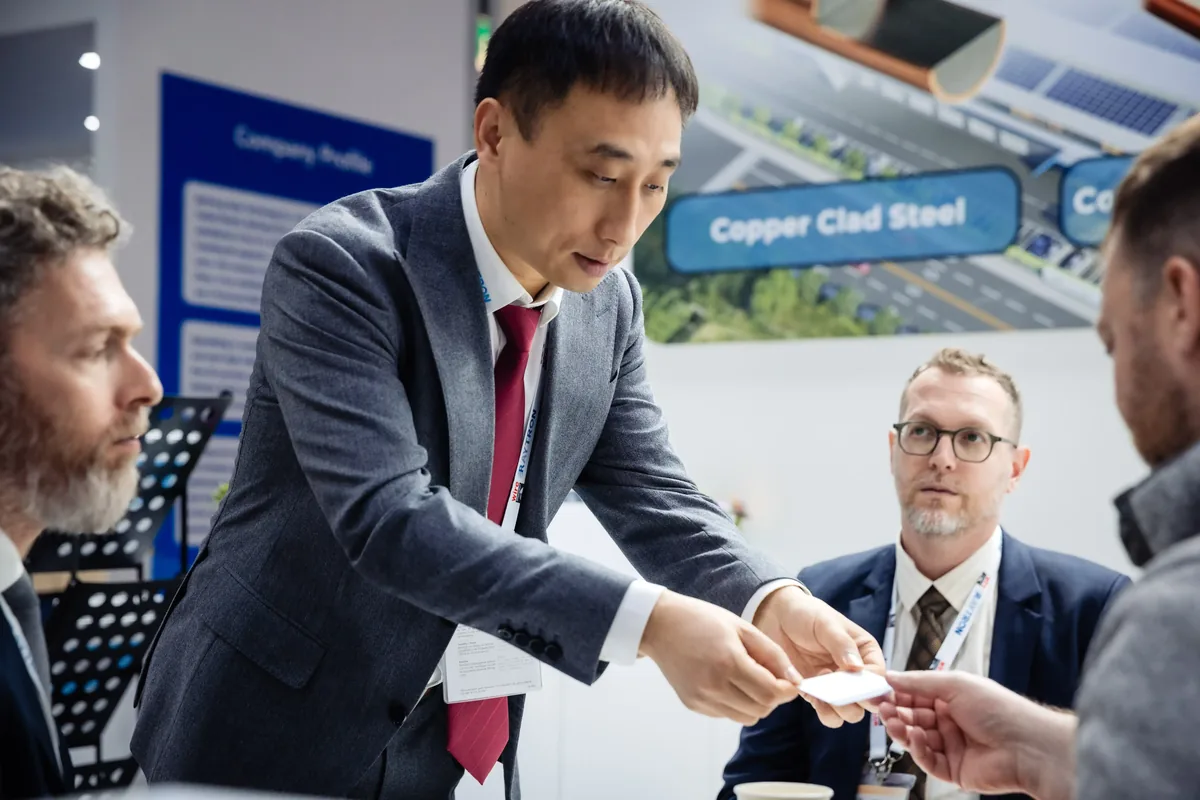
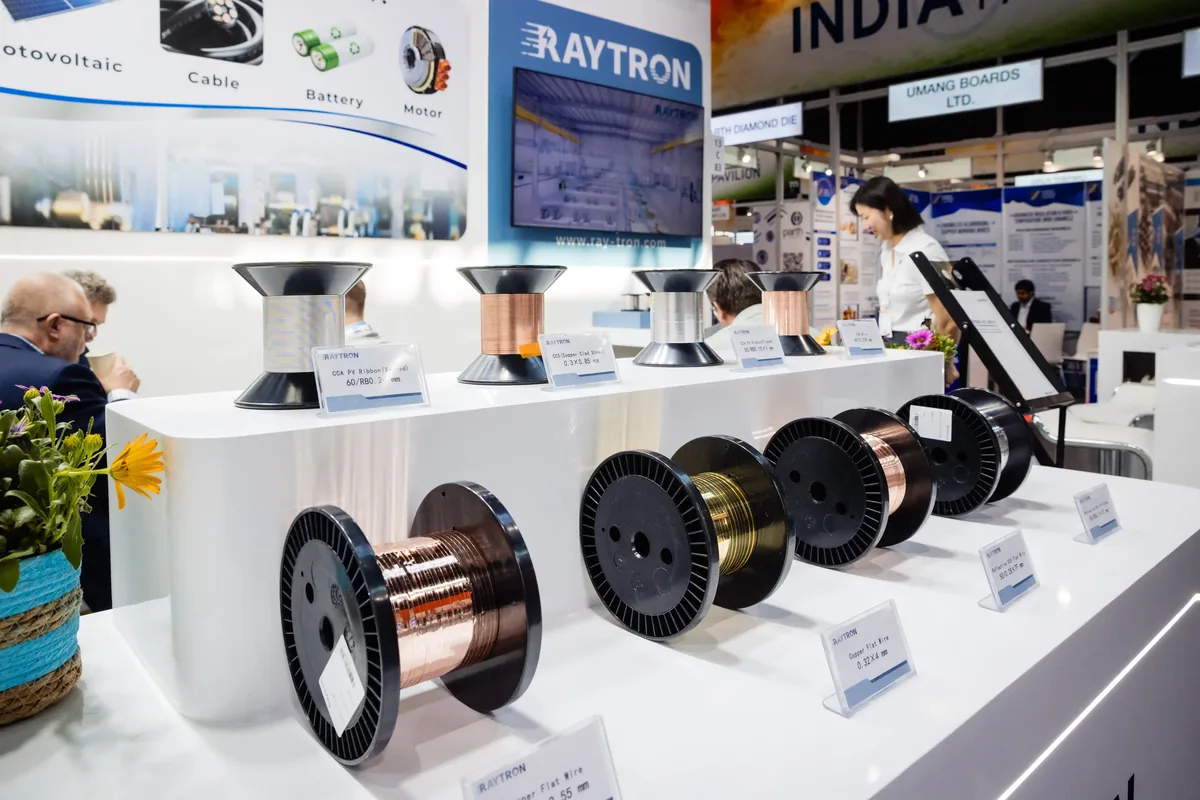
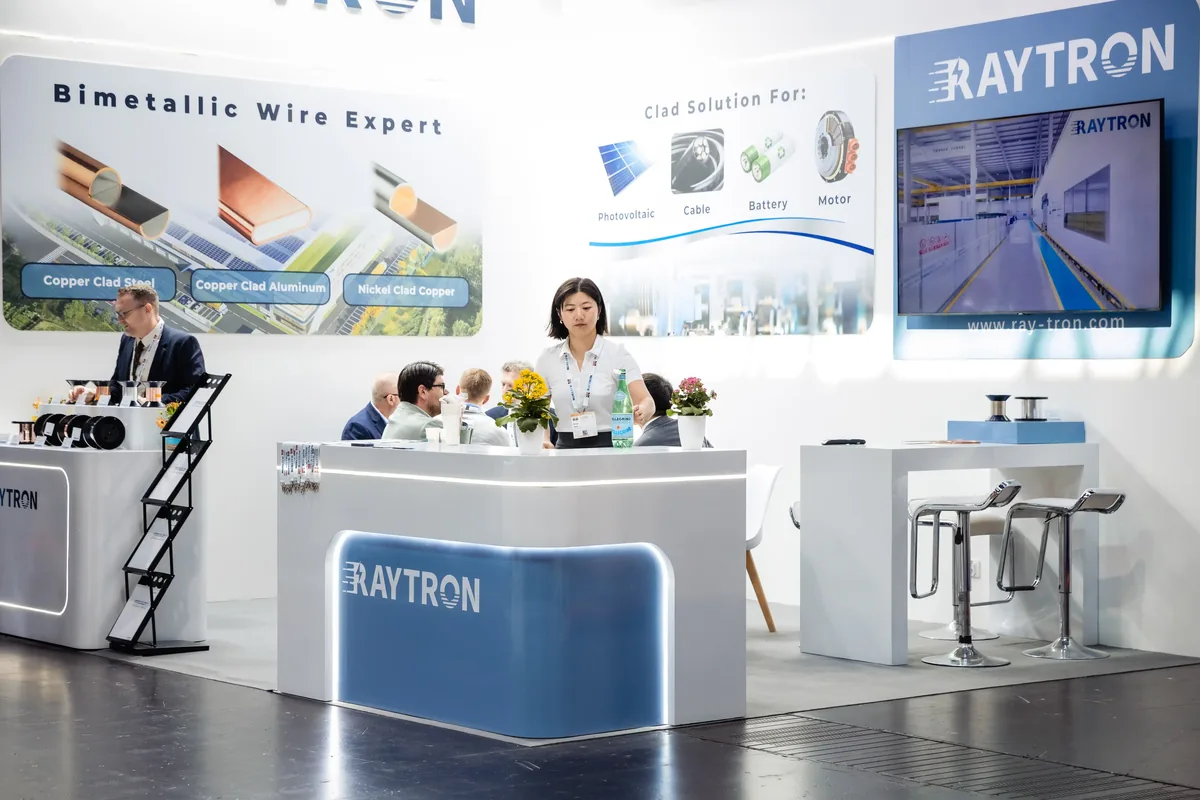
Raytron New Energy (Zhejiang) Co., Ltd. exhibited at wire 2026 from April 13 to 17 at the Düsseldorf Exhibition Centre, Booth H13C83. The objective was not simply to display materials. It was to translate customer requirements for lower weight, reduced copper consumption, strength, temperature capability, termination and long-term reliability into conductor structures that can be calculated, sampled and validated.
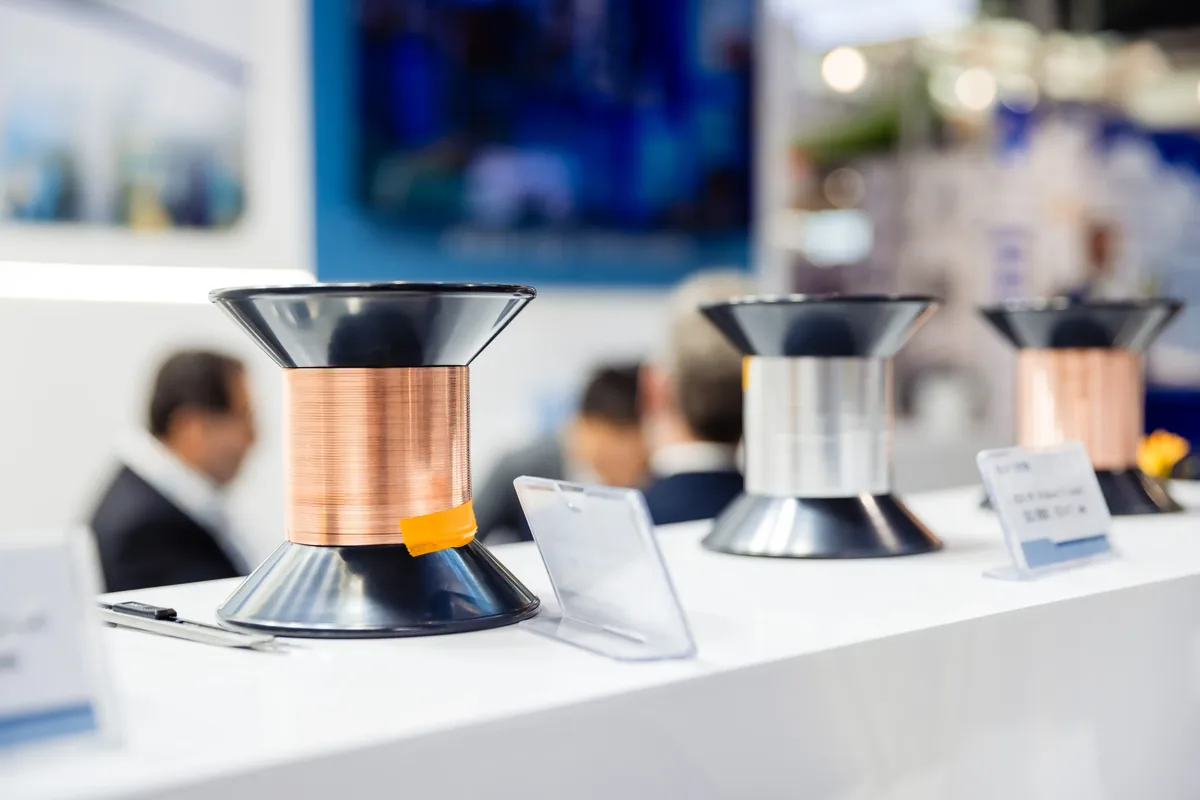
Raytron presented copper-clad aluminum, copper-clad steel, nickel-clad copper and selected custom clad materials. For each platform, the discussion started with the application rather than a generic substitution claim. Cross-section, length, resistance, temperature rise, weight, mechanical loading, downstream processing, termination, environmental exposure and qualification requirements must be reviewed together.
Copper-clad aluminum is not one fixed product. Copper-ratio definition, aluminum or aluminum-alloy core, temper, round or flat geometry, surface condition and downstream processing all influence density, conductivity, mechanical properties, termination behavior and total economics.
At the booth, Raytron therefore began with the customer’s current conductor, end product, failure history and non-negotiable constraints before discussing whether a clad conductor was appropriate and which structure should be validated first.
For cable, automotive and electronic interconnections, communications, coils and other lightweight conductor designs. Key review items include continuous copper coverage, bond-interface stability, dimensional capability, electrical-mechanical balance and compatibility with soldering, crimping, tinning and insulation processes.
For grounding, tracer wire, coaxial and communication conductors, signal applications and designs requiring higher strength with a functional copper surface. Core grade, copper ratio, bending, tensile behavior and corrosion exposure must be defined.
For high-temperature electronic interconnections, battery connections and environment-resistant designs, with emphasis on nickel-layer continuity, forming, joining and service temperature.
For projects requiring a specific balance of conductivity, joining, strength, temperature resistance or precious-metal efficiency, subject to a defined specification and validation method.
Customers who met Raytron at wire 2026, as well as teams that could not attend, can begin with one current conductor specification or drawing. The review follows a practical sequence: current design, target, constraints, candidate architecture, validation plan and commercial conditions.
Once the input is complete, Raytron can prepare a candidate specification, theoretical parameter comparison, manufacturability review, sample scope and recommended tests. Final performance statements remain subject to agreed drawings, technical specifications, test methods and batch-specific data.
Share your basics and current specification highlights. Raytron engineering will run an initial application, electrical, thermal, mechanical, processing, joining and environmental review.
Final performance and delivery are subject to mutually confirmed drawings, technical agreements, test methods and lot inspection data.
Raytron focuses on copper-aluminum composite PV ribbon and busbar ribbon, plus CCA, CCS and NCC clad conductors with custom specifications, sample support and production quotations.
Rolling, slitting and dimensional control
Supports samples, pilot lots and ongoing supply
Clad conductor, rolling and related processes
Suitable for engineering samples and trial orders
Initial acknowledgement within 24 business hours.
Quality system and lot traceability support