
Copper Foil
Copper Foil for Electrical Applications

Copper foil is supplied as a thin conductive layer for winding, shielding and electronic assemblies. Choose the foil by thickness, temper, surface condition and roll format. Battery and circuit-board applications also need a defined manufacturing route and process-specific surface requirements.
On this page
Product forms and application positions
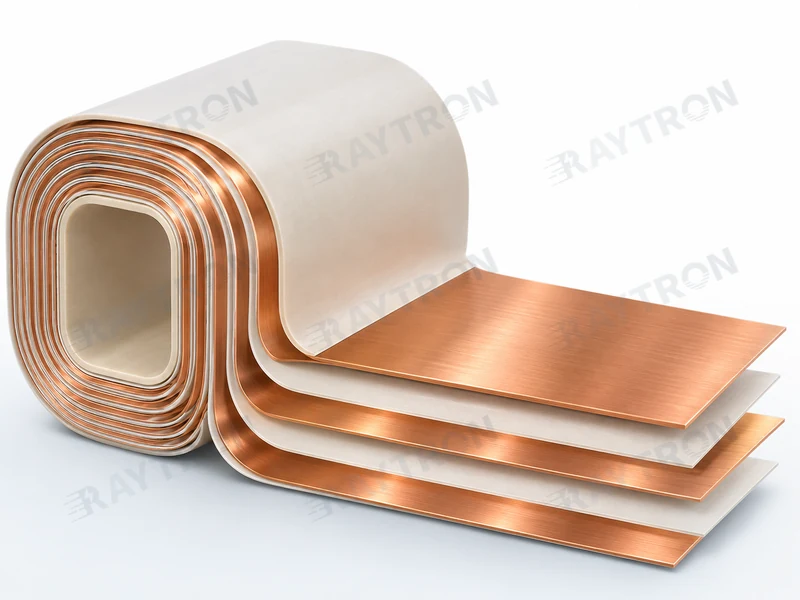
Construction and specification
Scroll horizontally to read all columns.
| Item | Specification |
|---|---|
| Material construction | Specified copper grade and temper |
| Product form | Foil |
| Surface | Bare, treated, anti-oxidation or adhesive-ready |
| Supply format | Rolls, slit rolls or sheets |
Choose the foil route for winding, shielding or joining
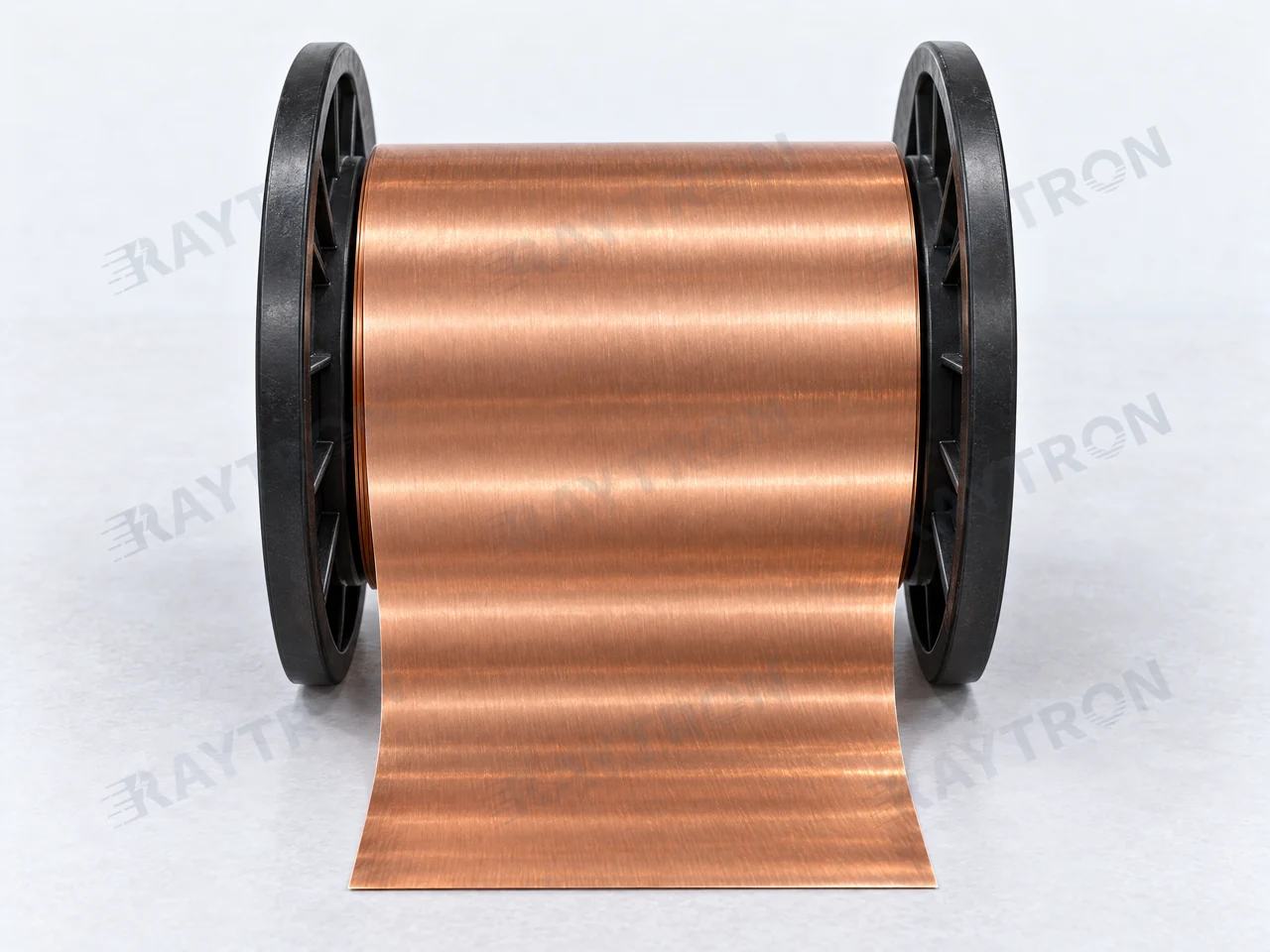
A winding foil is defined with turn arrangement and insulation; shielding foil with coverage, seams and bonding; a precision connection with its forming and joint. A generic foil label does not settle these differences.
Specify the manufacturing route, thickness, usable width, both surfaces, edges and roll handling for the selected process.
Copper foil procurement guideSpecification design factors
Drawing-defined specification
Geometry and performance
- Gauge, usable width and surface condition define the thin conductor layer.
- Edge quality and winding tension affect tracking and handling.
- Core size and roll build govern unwinding on the downstream equipment.
Manufacturing route, surface and roll format
Specify the foil manufacturing route independently from the end use. Winding, shielding, battery-electrode and circuit-board applications have different surface and downstream process requirements; rolled and electrodeposited routes are separate manufacturing choices.
Pair thickness and usable width with temper, edge quality, surface finish and roll or sheet format. For supported foil, identify carrier construction and release requirements. Roll support, winding direction and surface protection affect handling, coating, lamination and bonding. Keep electrical values with grade, condition, temperature and method.
Material and form references
Foil specifications identify thickness distribution, usable width, surface condition, pinholes and roll handling. Agree the inspection method for the foil construction and downstream process.
Standards and product formsProduct questions
What is copper foil?
copper foil is a thin copper material supplied in rolls or sheets for battery, electronics, thermal, shielding and precision industrial applications.
How is copper foil different from copper strip?
Copper foil is thinner and used where low thickness, flexibility, surface quality or high-frequency performance is important. Copper strip is thicker and used for structural current-carrying parts.
Can Raytron slit copper foil to narrow widths?
Yes. Raytron can supply slit rolls and custom widths for downstream lamination, stamping, winding or assembly processes.
What affects foil handling and surface performance?
Gauge, usable width and edge quality influence tracking and damage during unwinding. Surface texture and cleanliness affect the downstream bond or contact. Core size, roll build and tension connect the foil to the processing equipment.
How is supported foil specified?
Identify the carrier construction and release requirements where a supported foil is needed. Record the foil surface, usable width and downstream handling or bonding process separately.
Related products
Prepare your inquiry
- Width, thickness and tolerances
- Edge condition, burr, surface and roll dimensions
- Metal grade and temper
- Surface finish or coating, joining method and inspection requirements
- Quantity, spool or coil format, packaging and delivery destination