
PV Ribbon
Interconnect Ribbon for Solar Cell Stringing
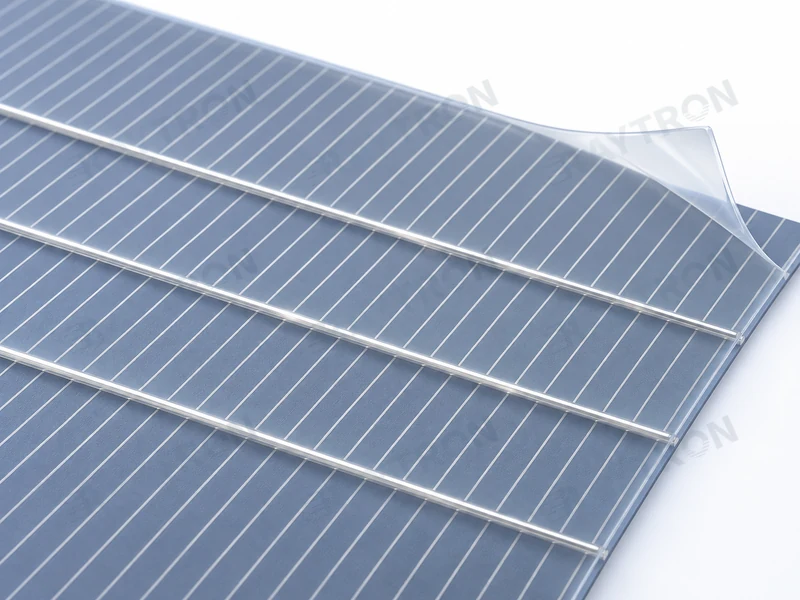

PV interconnect ribbon connects solar cells into a string. Conductor geometry and solder coating work with the cell contact pattern and stringing process.
On this page
Construction and specification
Scroll horizontally to read all columns.
| Item | Specification |
|---|---|
| Material construction | Conductor construction and solder coating specified for the ribbon position and cell process |
| Product form | Ribbon |
| Surface coating | Tin, low-temperature solder, black or reflective coating |
| Supply format | Spool, traverse wound spool or cut-to-length |
Explore the related product details for this material and product form.
Specification design factors
Drawing-defined specification
Geometry and performance
- Width, thickness and edge geometry define a narrow flat conductor.
- Metal layers and solder or insulation coatings perform different functions.
- Spool format, winding tension and joining behavior connect the material to the assembly process.
Cell-to-cell connections
Round and flat interconnects occupy different contact geometries. Mechanical condition and camber influence feeding and cell stress, while coating and soldering conditions influence wetting and joint formation.
The assembled string connects ribbon resistance, joint strength and cell integrity with the module design.
Material and form references
PV ribbon specifications separate the metallic conductor section from the solder coating. Cell layout, wire positioning, joining and module tests describe the intended interconnection.
Standards and product formsProduct questions
What is interconnect ribbon?
interconnect ribbon is a solar module interconnection material used to collect and transfer current between solar cells or cell strings. Raytron supplies custom ribbon dimensions, coating systems and packaging formats for different PV module technologies.
How do I choose interconnect ribbon?
Start with the cell technology and soldering temperature. Then check coating type, shading loss, yield strength, module reliability requirements and compatibility with the automated process.
Which drawing details are needed for Interconnect Ribbon for Solar Cell Stringing?
Width, thickness and tolerances. Edge condition, burr, surface and roll dimensions. Metal grade and temper. Coating alloy and thickness, soldering conditions, cell layout and spool format. Quantity, spool or coil format, packaging and delivery destination.
How does a flat section behave in bending and winding?
Width, thickness and corner geometry define the conductor envelope. Bending about the long and short edges produces different strains and springback. Bare metal and insulated finished dimensions occupy different portions of the available winding space.
Related products
Prepare your inquiry
- Width, thickness and tolerances
- Edge condition, burr, surface and roll dimensions
- Metal grade and temper
- Coating alloy and thickness, soldering conditions, cell layout and spool format
- Quantity, spool or coil format, packaging and delivery destination