
Copper Strip
Copper Strip for Stamped Terminals
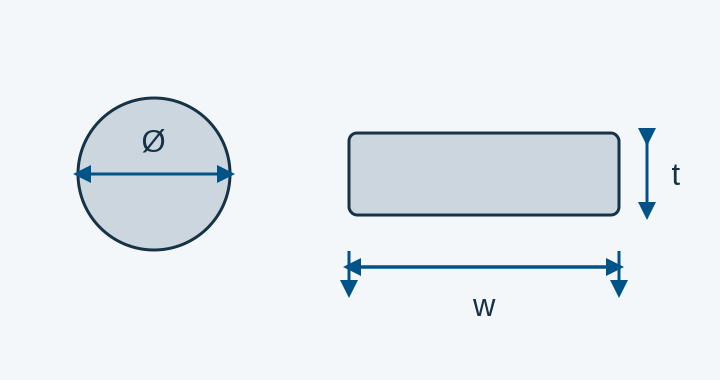

Copper strip for terminals needs the conductivity and forming properties required by the contact design. Specify grade, temper, thickness and strip width, together with grain direction, burr limits and surface finish. Include the stamping drawing and any plating requirements.
On this page
Construction and specification
Scroll horizontally to read all columns.
| Item | Specification |
|---|---|
| Material construction | Specified copper grade and temper |
| Product form | Strip |
| Temper | Soft, half hard, hard, custom annealed |
| Surface | Bare copper, tin plated, nickel plated or embossed |
Specify the feedstock for the stamped terminal
The strip grade and temper must suit the contact’s electrical role and the stamping and forming sequence. Copper strip is the material input; the finished connector adds contact geometry, housing and assembly conditions.
State thickness, width, grain or forming direction, burr direction, edge profile and any plating. Evaluate bends, springback, surface and the actual joint or contact.
Lead and connector-strip applicationSpecification design factors
Drawing-defined specification
Geometry and performance
- Thickness, width and temper govern forming and stamping behavior.
- Edge profile, burr direction and rolling direction affect the finished part.
- Surface and joining conditions determine electrical contact at the connection.
Selection and processing
A spring contact may require a copper alloy and temper different from a purely conductive terminal. Use the grade, strength/forming requirements, grain direction, burr and contact drawing to define the material. Plating follows the specified contact or soldering duty.
Material and form references
Strip specifications identify grade or layer construction, temper, width, thickness, burr and edge condition. Inspection follows the forming, joining or winding process for the finished part.
Standards and product formsProduct questions
What is terminal copper strip used for?
terminal copper strip is used in electrical connectors, terminals, busbars, batteries, shielding, electronics and industrial assemblies where conductivity, formability and dimensional stability matter.
Which drawing details are needed for Copper Strip for Stamped Terminals?
Width, thickness and tolerances. Edge condition, burr, surface and roll dimensions. Metal grade and temper. Surface finish or coating, joining method and inspection requirements. Quantity, spool or coil format, packaging and delivery destination.
What information is needed for a terminal copper strip quotation?
Please provide material grade, thickness, width, temper, surface finish, annual demand, packaging preference and target application.
What affects strip forming and coil handling?
Thickness, width, temper and rolling direction govern forming response. Edge profile and burr direction affect the finished part. Camber describes lateral curvature; flatness describes departure from a plane, so the two address different processing effects.
Related products
Prepare your inquiry
- Width, thickness and tolerances
- Edge condition, burr, surface and roll dimensions
- Metal grade and temper
- Surface finish or coating, joining method and inspection requirements
- Quantity, spool or coil format, packaging and delivery destination