
Copper-Aluminum Composite and Copper PV Ribbon
Use a defined copper-ribbon baseline to compare conductor structure, resistance, coating, stringing performance and module-level trial results.
Compare conductor structure before the trial
Identify the copper/aluminum base, copper fraction basis and actual geometry separately from the solder coating. Match resistance and the required cell layout before comparing material mass or purchasing cost.
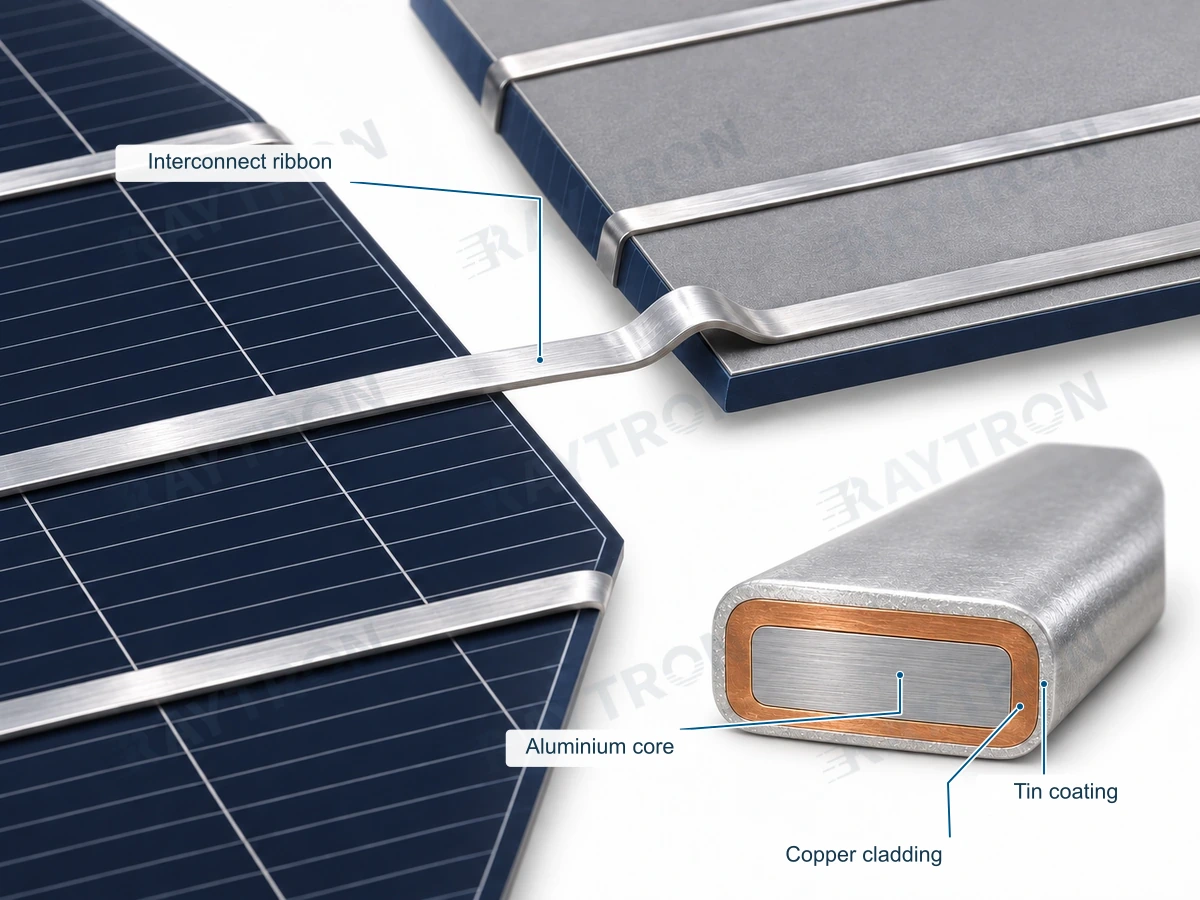
Carry the selected construction into the shared baseline/candidate trial. Procurement savings use the cost of the ribbon being replaced; broader module effects remain a separate evaluation.
Shared ribbon trial comparisonEngineering comparison
Scroll horizontally to view all columns.
| Decision | copper-aluminum composite PV ribbon | pure copper PV ribbon | Comparison conditions |
|---|---|---|---|
| Layer construction | Aluminum-containing conductor with a defined copper layer and solderable finish | Copper-base conductor with the specified solderable finish | Record the core, layer ratio basis and coating separately. |
| Cell geometry | Section and stiffness must be assessed with the actual layered construction | Section and stiffness depend on copper grade and condition | Match cell pads, ribbon dimensions and stringer setup; do not assume the same cross-section yields equal resistance. |
| Joining and reliability | Check the copper surface, cut ends and coating in the cell process | Check the copper grade, coating and cell process | Compare peel method, EL inspection, resistance and module tests using the same bill of materials. |
| Cost basis | Include qualified composite section, coating and process yield | Include qualified copper section, coating and process yield | Compare cost per accepted module; do not infer saving from price per kilogram. |
Copper-Aluminum Composite and Copper PV Ribbon: comparison record — open worksheet
Record your project requirements and observations, then download or include them in an inquiry.
| Item | Information / units | Your input |
|---|---|---|
| Comparison basis | Choose a common basis; no automatic equivalence is inferred | |
| Baseline and candidate | Materials, construction, form and drawing revisions | |
| Layer construction | Aluminum-containing conductor with a defined copper layer and solderable finish | Copper-base conductor with the specified solderable finish · Record the core, layer ratio basis and coating separately. | |
| Cell geometry | Section and stiffness must be assessed with the actual layered construction | Section and stiffness depend on copper grade and condition · Match cell pads, ribbon dimensions and stringer setup; do not assume the same cross-section yields equal resistance. | |
| Joining and reliability | Check the copper surface, cut ends and coating in the cell process | Check the copper grade, coating and cell process · Compare peel method, EL inspection, resistance and module tests using the same bill of materials. | |
| Cost basis | Include qualified composite section, coating and process yield | Include qualified copper section, coating and process yield · Compare cost per accepted module; do not infer saving from price per kilogram. | |
| Methods, conditions and evidence | Units, test conditions, result source and reviewer |
Other formats and preview
Save or restore a draft
Drafts stay in this browser. Clear inputs also removes the saved draft.
Worksheet version: RT-RFQ-WORKSHEET-1.
Products and specifications
Include the drawing, intended application and acceptance criteria when requesting a comparison.
Plan a PV ribbon comparison